

Tax tips for freelancers usually feel most urgent when a client payment clears, a pile of receipts shows up on the desk, and tax season suddenly feels much closer. We see that pattern often with independent professionals across Houston, from designers in EaDo to consultants working from spare bedrooms in the Heights.
Freelance work offers flexibility, but it also shifts more recordkeeping and tax responsibility onto the person doing the work. Home office deductions are one of the first places freelancers look for relief, yet they are also one of the most misunderstood parts of a return. However, there are practical, legal ways to approach this area with more clarity and less guesswork.
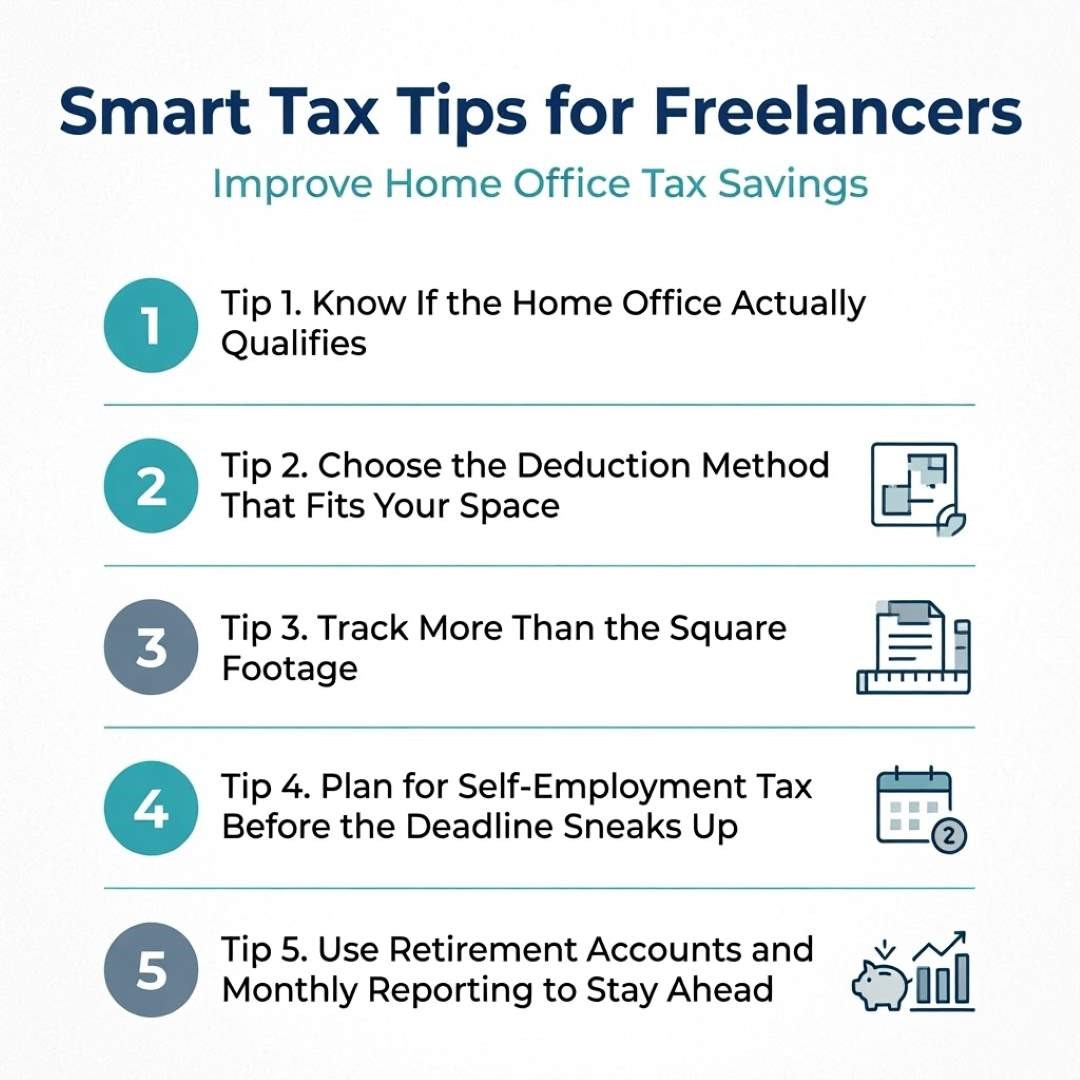
Tip 1. Know If the Home Office Actually Qualifies
One of the most useful tax tips for freelancers is to start with the basic rule before calculating anything. In general, a home office has to be used regularly and exclusively for business. That means the space should be dedicated to freelance work rather than shared with personal use.
A desk in a guest room that doubles as a family storage area may not meet that standard. A defined workspace used only for client calls, design work, writing, or invoicing may be easier to support. Documentation matters here. Floor measurements, photos of the workspace, and records showing how the area is used can all be helpful if questions come up later.
Tip 2. Choose the Deduction Method That Fits Your Space
Once the space qualifies, the next step is choosing the method used to calculate the deduction. In many cases, freelancers look at two options.
- The simplified method lets you deduct $5 per square foot of dedicated home office space, up to a maximum of 300 square feet.
- The actual expense method uses the percentage of the home devoted to business and applies that percentage to eligible costs such as rent, utilities, insurance, and certain repairs.
Neither method is automatically better in every case. A smaller office in a Midtown apartment may fit well under the simplified method, while a larger dedicated workspace in a home office setup may make the actual expense method worth reviewing more closely.
Tip 3. Track More Than the Square Footage
Among the more practical tax tips for freelancers is remembering that home office savings often extend beyond the room itself. Freelancers sometimes focus only on rent or mortgage costs and miss other categories tied to business use. Common areas worth tracking may include:
- The business-use portion of the internet and phone service
- Office furniture, monitors, printers, and laptops used for freelance work
- Repairs that relate directly to the office area
- Supplies used regularly for client work, shipping, or printing
Good records make these conversations much easier. Saving receipts digitally and organizing expenses monthly can support cleaner filings and less scrambling in April.
Tip 4. Plan for Self-Employment Tax Before the Deadline Sneaks Up
Home office deductions matter, but they are only one part of the freelance tax picture. Another of the more important tax tips for freelancers is understanding self-employment tax early. The IRS notes that self-employed individuals generally pay 15.3 percent in self-employment tax, which covers Social Security and Medicare taxes that are usually shared with an employer in a traditional job.
That number can catch newer freelancers off guard, especially after a strong quarter or a busy year. Reviewing income periodically and setting aside funds for estimated payments may help reduce surprises later.
Tip 5. Use Retirement Accounts and Monthly Reporting to Stay Ahead
Some of the useful tax tips for freelancers have less to do with April and more to do with habits built during the year. Retirement contributions through accounts such as a SEP IRA or SIMPLE IRA may lower taxable income, depending on the taxpayer’s situation, while also helping freelancers build long-term savings outside a traditional employer plan.
Just as important is visibility into the business itself. When income fluctuates from month to month, it becomes much easier to miss trends, underpay estimates, or lose track of deductible costs. That is why we often encourage freelancers to look at their numbers regularly rather than relying on memory.
For professionals who want a clearer view of income patterns and expense categories, financial reporting and analysis can support more informed decisions throughout the year.
FAQs
Can I claim a home office deduction if I also work from coffee shops or client sites?
In many cases, yes. The key question is whether there is still a space at home used regularly and exclusively for business. Working elsewhere at times does not automatically disqualify the home office.
Does working from a rented apartment prevent me from taking the deduction?
No. Renters may still qualify. Under the actual expense method, a business-use portion of rent and other eligible home expenses may be considered if the workspace meets the required rules.
Are freelancers allowed to deduct equipment in the year it is purchased?
Some equipment purchases may be expensed in the year they are placed in service, depending on the cost and how the item is used for business. A tax professional can help review which treatment may apply.
How often should freelancers review their books during the year?
A monthly review is often a practical rhythm. It gives enough frequency to catch missing expenses, track income changes, and keep records usable without turning bookkeeping into a weekly burden.
Turn Better Habits Into a Better Filing Season
The most helpful tax tips for freelancers are usually the ones that fit real daily work, not just tax theory. A dedicated office space, organized expense records, and periodic review of income can make home office savings far easier to support when filing season arrives.
If your freelance records are becoming difficult to manage, Dabney Tax & Accounting Services can help you review your income, expenses, and filing considerations.


