

Understanding common tax mistakes and how to avoid them is something every taxpayer benefits from, whether you’re filing as an individual or managing returns for a growing business. At Dabney Tax & Accounting Services, we see the same avoidable errors come up season after season with clients across the Houston area.
A little preparation and the right professional support can make a difference in how smoothly the filing process goes. Here are ten of the most frequently encountered filing errors and what you can do to steer clear of them.
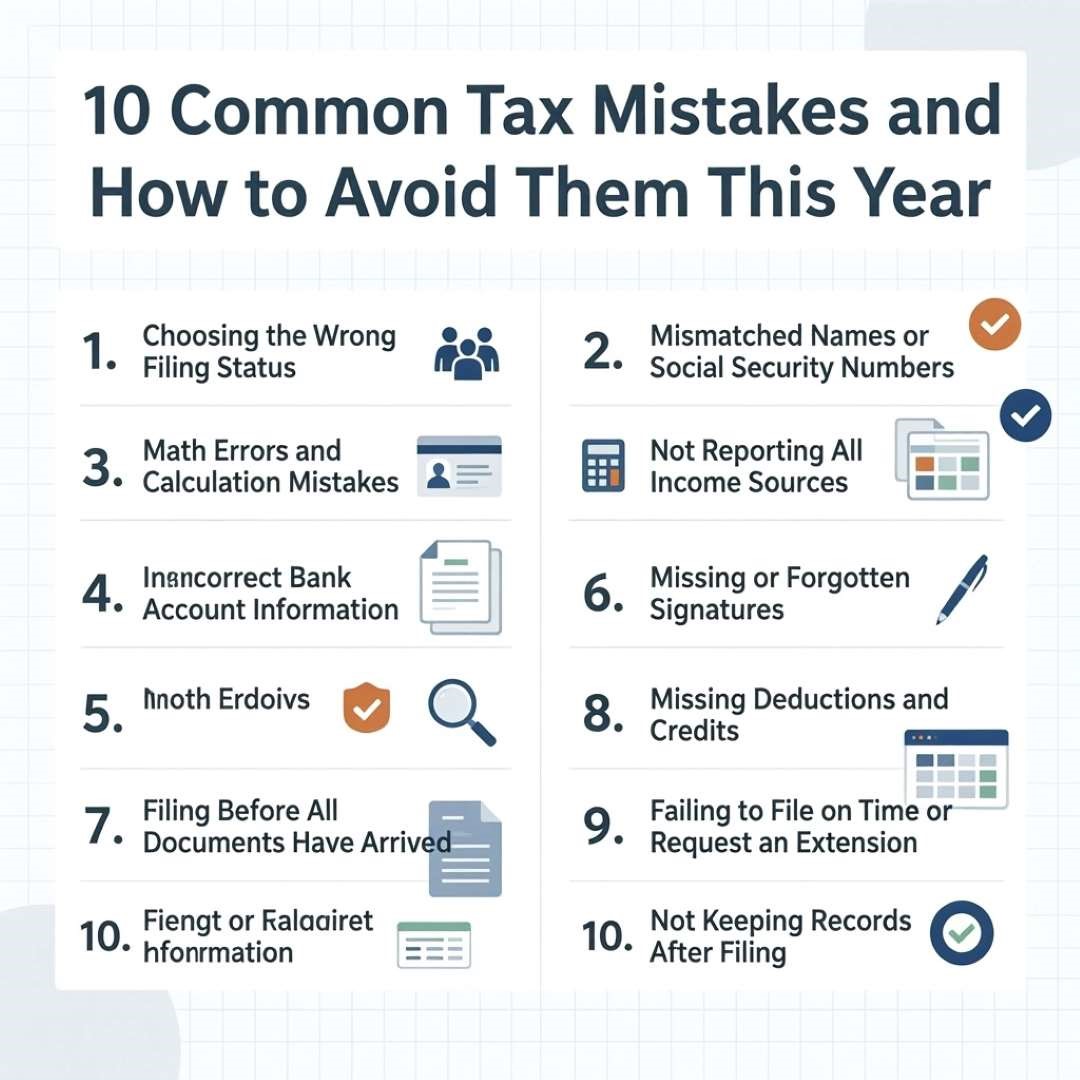
1. Choosing the Wrong Filing Status
Filing status affects your tax bracket, standard deduction, and eligibility for certain credits. Common errors include filing as Single when Head of Household may apply, or not updating status after a life change like marriage or divorce. If your personal circumstances changed during the year, reviewing your filing status carefully before submitting is always a worthwhile step.
2. Mismatched Names or Social Security Numbers
Every name and Social Security Number on a return must match Social Security Administration records exactly. Even a minor discrepancy can trigger a processing delay or rejection. Reviewing each entry against the actual Social Security card before filing tends to catch these issues early, particularly on returns that include dependents.
3. Math Errors and Calculation Mistakes
Manual calculation errors remain one of the most common reasons returns get flagged for correction. Tax preparation software handles calculations automatically, which significantly reduces this risk. For Houston-area taxpayers who want a professional review built into their filing process, individual tax preparation handled by a qualified team can help catch errors before they cause delays.
4. Incorrect Bank Account Information
A single transposed digit in a routing or account number can redirect a refund entirely or cause it to be rejected. Double-checking direct deposit details against an actual bank statement rather than relying on memory is a simple habit that prevents a frustrating and avoidable delay. This is one of the more straightforward examples of common tax mistakes and how to avoid them in practice.
5. Missing or Forgotten Signatures
An unsigned paper return is considered invalid and will be returned for signature, delaying the entire process. For e-filed returns, the electronic PIN must be completed before submission. It’s a simple check, but one worth building into your review process before any return is submitted.
6. Not Reporting All Income Sources
According to the IRS, underreporting income is one of the primary contributors to the tax gap between taxes owed and taxes actually paid. Freelance income on 1099-NEC forms, interest income, side business revenue, and gig economy earnings all need to be reported, regardless of whether a formal document was received.
Keeping organized records of all income sources throughout the year is one of the more effective ways to avoid unintentional omissions.
7. Filing Before All Documents Have Arrived
Filing too early, before all W-2s, 1099s, and other income documents have been received, can result in an inaccurate return that requires amendment later. Most employers and financial institutions issue these documents by late January, but some arrive in February or beyond.
Waiting until all expected documents are in hand before beginning preparation is generally the more careful approach.
8. Missing Deductions and Credits
Many taxpayers may overlook credits and deductions they may be eligible. Several common tax credits and deductions are frequently missed, including the Earned Income Tax Credit, Child Tax Credit, education credits, and self-employed health insurance deductions.
Understanding common tax mistakes and how to avoid them in this area often starts with a professional review before filing season begins. Taxpayers who want that kind of proactive review may find that tax planning conversations held before the filing deadline help identify relevant opportunities well in advance.
9. Failing to File on Time or Request an Extension
Missing the filing deadline without requesting an extension can trigger a failure-to-file penalty that accumulates over time. It is worth noting that an extension to a file is not an extension to pay.
If taxes are owed, payment is still generally expected by the original deadline even when an extension has been granted. Submitting an extension request alongside a reasonable estimated payment tends to be the more prudent path for taxpayers who are not ready to file on time.
10. Not Keeping Records After Filing
The IRS generally has three years from the filing date to assess additional taxes, though that window can extend in certain circumstances. Keeping organized copies of filed returns and supporting documentation for at least three years is a widely recommended practice.
For business owners managing a higher volume of records, maintaining those documents in an organized format throughout the year makes the retention process considerably more manageable.
Businesses looking for support in maintaining that kind of organized financial foundation may find that bookkeeping and payroll services provide a practical structure for keeping records current and accessible year-round.
FAQs
What should I do if I realize I made an error after filing my return?
In many situations, mistakes can be corrected using IRS Form 1040-X for filing an amended return. The general window for filing an amendment to claim a refund is three years from the original filing date. A tax professional can help you evaluate whether an amendment is necessary and how to approach the correction process.
How do I know if I am eligible for the Earned Income Tax Credit?
Eligibility depends on income level, filing status, and whether you have qualifying dependents, among other factors. The IRS provides an eligibility assistant tool on its website, and a tax professional can help determine whether the credit applies based on your specific circumstances.
Is it better to file early or wait until closer to the deadline?
Filing early can be beneficial if you are expecting a refund and all documentation is complete. However, filing before all income documents have arrived can lead to inaccuracies requiring an amendment later. Waiting until all expected forms have been received and reviewed is generally the more careful approach for most taxpayers.
Can a tax professional help if I have unfiled returns from prior years?
In many cases, yes. Tax professionals who handle both individual and business returns can often assist with prior-year filings. Addressing unfiled returns as soon as possible is generally advisable, as penalties and interest may continue to accumulate depending on the circumstances involved.
File With a More Organized Process This Season
Knowing the most common tax mistakes and how to avoid them is the first step toward a smoother, less stressful filing experience.
At Dabney Tax & Accounting Services, we work with individuals and business owners across the Houston area to help make the preparation process more organized and more informed. If you’d like a professional review before your return goes out this season, we’d welcome the conversation.


