

Determining when to hire a bookkeeper is an important milestone that can influence how effectively you manage your daily business operations. Business owners may initially manage their own bookkeeping, but increasing transaction volumes, additional accounts, or more complex operations can create a need for structured accounting support.
We recognize that administrative tasks can accumulate quickly and divert your focus away from core business activities. Transitioning these tasks to a qualified professional may help you maintain organized records and support your long-term compliance efforts.
What Operational Signs Indicate It Is Time for Support
A business may consider professional bookkeeping support when maintaining financial records requires more time or specialized attention than its existing staff can reasonably provide. Spending several hours each week categorizing receipts and balancing ledgers suggests that your company may benefit from dedicated assistance.
Utilizing dedicated Houston bookkeeping services can provide a structured framework to keep your ledgers current and balanced throughout the year. Regular updates to your general ledgers can also support clearer visibility into your business cash positions and outstanding vendor obligations.
Business owners often notice several practical warning signs during their daily operations:
- Spending multiple hours each week on routine transaction entry.
- Experiencing recurring delays in recording customer invoices or reconciling accounts receivable.
- Facing backlogs when attempting monthly bank reconciliations.
- Misplacing physical or digital receipts needed for tax substantiation.
How Does Growth Affect Recordkeeping Complexity
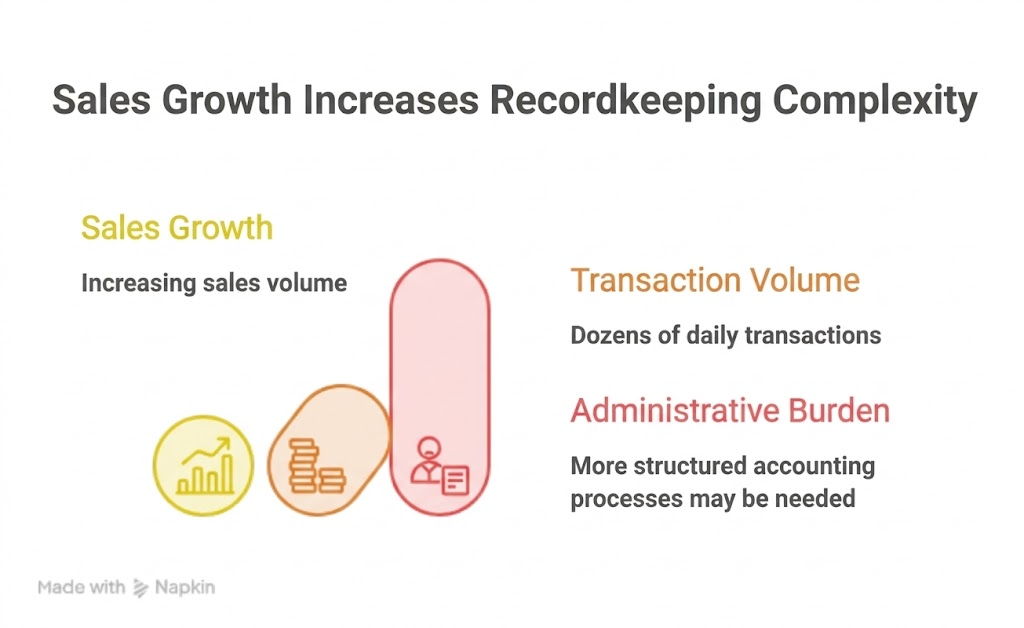
Knowing when to hire a bookkeeper for small business operations often depends on how quickly your sales volume increases and whether your revenue streams are diversifying. As transaction volumes, accounts, and reporting requirements increase, businesses may find that dedicated accounting software and more structured bookkeeping procedures better meet their recordkeeping needs.
If your enterprise manages inventory across multiple sales channels, a professional can assist in establishing consistent categorization methods. These recording routines can support clearer financial tracking and help you evaluate overhead costs across different operating departments.
Expansion into additional product lines, locations, or sales channels may introduce new accounting considerations, including revenue categorization, inventory tracking, and financial reporting needs.
How Do Payroll and State Rules Impact Your Administrative Burden
Managing employee payroll and state reporting obligations represents a clear indicator that your administrative workload has outgrown basic recordkeeping methods. Businesses with employees generally have federal payroll tax withholding, deposit, and reporting responsibilities. Texas employers may also have unemployment tax and wage reporting obligations through the Texas Workforce Commission, depending on their circumstances.
Utilizing professional Houston payroll services can support your compliance efforts regarding quarterly state unemployment tax filings. Navigating these requirements with the Texas Workforce Commission can become increasingly complex as your workforce expands.
For example, a retail distributor hiring seasonal employees may need to account for additional payroll records, federal employment tax requirements, and applicable Texas unemployment reporting. Coordinating payroll records with bookkeeping can help organize the information used for these filings.
How Does Routine Bookkeeping Benefit Annual Tax Filings
Maintaining organized financial records throughout the year can provide tax preparers with information about business income, expenses, assets, and liabilities when preparing annual returns. Knowing when to hire a bookkeeper can assist you in establishing organized files long before filing deadlines arrive.
Providing clean financial records to your tax professional supports the business tax preparation process by allowing them to focus on technical evaluation rather than data entry. Unorganized records can delay your filings and limit your ability to review potential tax positions thoroughly.
Evaluating when to hire a bookkeeper for small business needs can also help you track deductible expenses as they occur. Monthly bookkeeping can help organize recorded capital expenditures and business expenses. Certain deductions, including vehicle mileage and business travel, may require additional documentation and substantiation beyond the accounting records.
How Do Federal Record Retention Rules Influence Your Timing
Evaluating statutory recordkeeping timelines can help you decide when to hire a bookkeeper to maintain compliance with federal authorities. Regulatory agencies expect businesses to retain organized files that substantiate all reported income and deductions on their returns.
IRS guidance generally requires employers to retain employment tax records for at least four years after the tax becomes due or is paid, whichever is later. Businesses should establish record-retention procedures appropriate to their tax and reporting obligations. Bookkeeping support may assist with organizing certain records when included in the engagement.
Businesses can consider professional bookkeeping support at any point during the year. The appropriate timing depends on current recordkeeping needs, transaction volume, outstanding reconciliations, and whether historical cleanup is required.
What Systems Help Maintain Daily Cash Flow Oversight
Establishing structured financial tracking workflows provides you with regular visibility into your operating accounts and cash balances. Knowing when to hire a bookkeeper helps you transition these tracking duties so you can monitor your working capital more consistently.
Regular bank reconciliations can help identify differences between recorded transactions and bank activity. Separate reviews of accounts receivable, recurring expenses, and outstanding obligations may provide additional information about cash flow. Depending on the business’s accounting processes and the scope of services, additional activities may include:
- Reviewing daily deposits against merchant processing statements.
- Matching vendor bills against approved purchase orders.
- Tracking recurring software subscriptions and utility expenses.
- Updating customer accounts receivable ledgers regularly.
When to Hire a Bookkeeper FAQs
At what point should a growing business consider outsourcing bookkeeping?
Outsourcing is often recommended when administrative tasks require several hours each week or start pulling you away from core business operations. If you are experiencing backlogs in reconciliations or missing payment deadlines, bringing in external help can support your business.
What tasks fall outside the scope of a bookkeeper's responsibilities?
Bookkeeping generally focuses on recording, categorizing, reconciling, and maintaining financial transactions. Tax preparation, tax planning, and financial statement assurance services are separate professional activities that may require additional qualifications or specialized engagements. Dabney Tax & Accounting Services provides CPA-led bookkeeping, tax preparation, and tax planning services but does not provide financial statement audits, reviews, or compilations.
Can you handle some administrative tasks yourself after hiring support?
Many business owners choose a cooperative approach where they continue managing customer invoicing while their professional handles bank reconciliations. This cooperative method can support efficient daily operations while maintaining professional ledger oversight.
How do state regulations in Texas affect bookkeeping requirements?
Texas does not impose an individual state income tax, but certain businesses have Texas franchise tax reporting obligations, including applicable Public Information Reports or Ownership Information Reports. Employers may also have Texas Workforce Commission unemployment tax and reporting requirements. Bookkeeping records can provide financial information used in preparing applicable filings.
Evaluating Your Business’s Bookkeeping Needs
As transaction volumes and accounting responsibilities change, business owners may evaluate whether their existing bookkeeping processes continue to meet their needs.
Regular transaction recording, account reconciliation, and organized financial records can provide information for tax preparation and management reporting. Dabney Tax & Accounting Services provides CPA-led bookkeeping and accounting support for businesses in Houston and throughout Texas.


