
In our experience, questions like “When are 1099s due?” usually come up when owners are reviewing vendor payments, preparing records, and trying to understand which forms may need to be sent to contractors and filed with the IRS. The answer often depends on the type of 1099 involved, the payment category, and the filing method.
This article is intended as a general educational overview for businesses in Houston. Filing deadlines and form requirements should always be reviewed carefully based on the business’s records and reporting responsibilities.
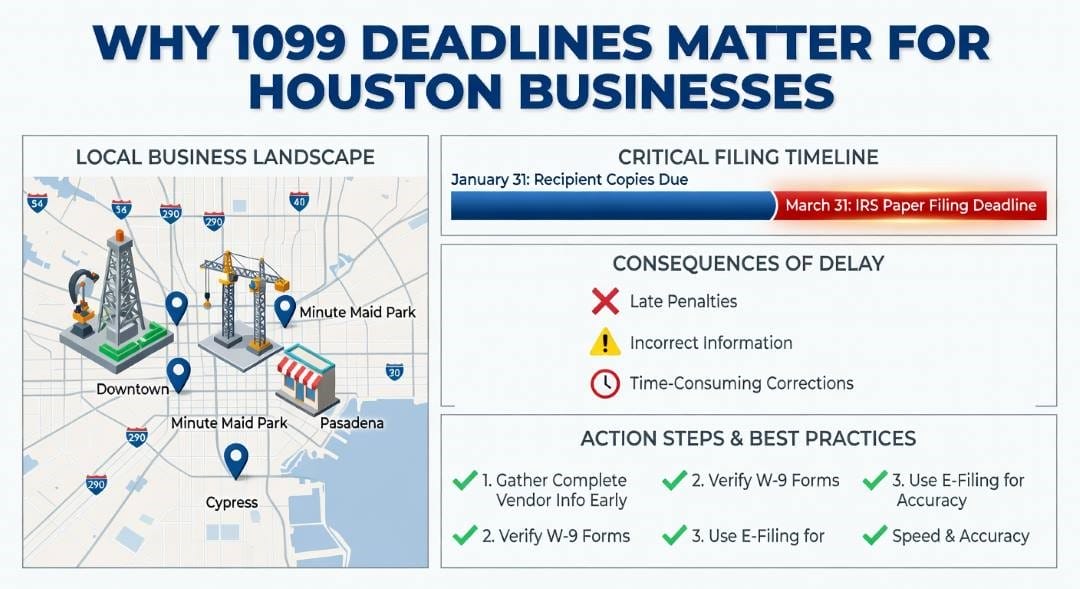
Why 1099 Deadlines Matter for Houston Businesses
We often speak with small business owners in Downtown Houston, Pasadena, and Cypress who are juggling payroll, bookkeeping, invoicing, and year-end tax tasks all at once. In that setting, 1099 deadlines can become one more important item on a long list.
That is why concerns like “When are 1099s due?” are more than a calendar question. Missing a filing deadline may lead to penalties, and filing incorrect information can create additional issues that take time to correct. For businesses that pay independent contractors, consultants, or certain service providers, 1099 reporting is often part of the broader year-end reporting process.
A few general reasons these deadlines matter include:
- Recipient copies are typically due early in the year
- IRS filing dates may vary by form type
- Penalties may apply per form
- Missing vendor information can delay timely filing
For taxpayers trying to stay organized across both business and personal filing obligations, individual tax preparation may also be relevant during the same filing season.
Common 1099 Due Dates Businesses Should Know
In our work with clients, we often explain that the deadline depends in part on the form being filed. For many businesses, the most common information return is Form 1099 NEC for nonemployee compensation.
When clients ask, “When are 1099s due?”, we generally explain that Form 1099 NEC is usually due to both the recipient and the IRS by January 31. Other forms, such as certain 1099 MISC filings, may have different IRS deadlines depending on whether the return is filed on paper or electronically.
According to IRS guidance, if a due date is on a weekend or legal holiday, the deadline generally moves to the next business day. For business owners in Houston and across Texas, that timing rule can be important when planning year-end reporting.
Since filing requirements can vary by form and payment type, businesses often review contractor payments before January rather than waiting until the deadline is close.
The Role of Record Review Before Filing Season
One of the main reasons 1099 deadlines become stressful in areas like Katy, League City, and Friendswood is that businesses may not have complete contractor records ready by year’s end. In our experience, the filing deadline itself is often only part of the challenge. The bigger issue may be missing tax forms, incomplete payment records, or unclear vendor classifications.
That is another reason queries like “When are 1099s due?” should be paired with an early review of who was paid and how those payments were made. Businesses may need to look at contractor names, taxpayer identification numbers, total payments, and whether the payment method affects who reports the income.
For businesses reviewing these issues as part of year-end filing, business tax preparation may support a broader review of reporting obligations and tax records.
A Case Study from the Houston Area
In one Houston area engagement, we worked with a service business in Sugar Land that had paid several contractors during the year but had not collected all vendor tax information in advance.
As year-end approached, the owner asked, “When are 1099s due?” and whether there was still enough time to complete the filing process correctly. In that type of situation, we typically review available payment records, identify which vendor details may still be missing, and explain the general deadline framework so the business can better understand what needs attention first.
Why Late or Incorrect Filings Can Create Problems
For business owners, late 1099 filing is often less about intent and more about timing. A form may be delayed because a W-9 was not collected, totals were not reviewed early enough, or payments were not clearly categorized during the year.
Still, “When are 1099s due?” remains an important question because penalties may apply on a per form basis, and those amounts may increase depending on how late the filing becomes. The exact amount can vary by tax year and the facts involved, but the general point is that delays can become more costly over time.
Good recordkeeping may help reduce the risk of avoidable problems. For businesses that want more structure around year-round records, bookkeeping and payroll services may support more organized tracking of payments and vendor activity.
What Businesses Often Review Before Sending 1099s
When we help Houston area businesses think through year-end reporting, we usually encourage a basic review process before forms are prepared. This is not about offering one-size-fits-all instructions. It is about identifying common areas that often affect whether the filing is timely and complete. That review may include:
- Whether vendor tax information was collected
- Whether total annual payments were tracked correctly
- Whether payment methods affect 1099 reporting
- Whether the correct form type is being considered
- Whether the recipient copies and the IRS filing dates match the form involved
For many businesses in Baytown, Kingwood, and The Woodlands, these questions become easier to manage when they are addressed before the end of January rather than after a deadline has already passed.
FAQs
How can businesses avoid 1099 penalties in the future?
In many cases, businesses may reduce filing problems by collecting vendor tax information early, reviewing contractor payments before year-end, and confirming which forms may apply before the filing deadline gets close.
When is Form 1099 NEC usually due?
Form 1099 NEC is generally due to both the recipient and the IRS by January 31, subject to weekend or holiday timing rules.
Do all contractor payments require a 1099?
Not always. Whether a payment requires a 1099 can depend on the type of payment, the vendor classification, and the payment method used. Businesses often review those details before filing.
What happens if a business files a 1099 late?
Late filings may lead to penalties, and those penalties may increase depending on how long the filing is delayed. The amount can vary by tax year and filing status.
To Conclude
For businesses across Houston, “When are 1099s due?” is an important year-end compliance question. In general, the answer depends on the type of form involved, the filing deadline that applies, and whether records are complete enough to prepare the forms on time.
In our experience, businesses are often in a better position when contractor payments and vendor records are reviewed well before January deadlines arrive. For support, you can contact Dabney Tax and Accounting Services Houston TX. Our team offers professional support that may help business owners better manage filing deadlines while focusing on running their operations.


