

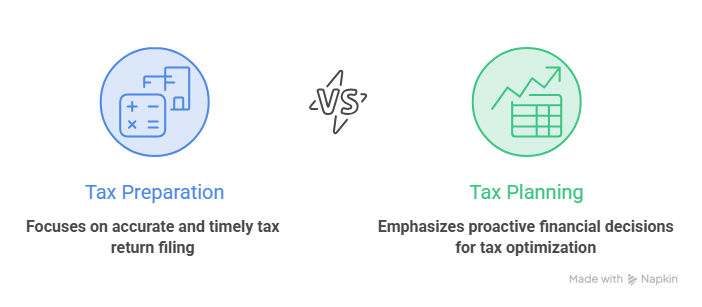
Comparing tax planning vs. tax preparation represents a fundamental step in managing your financial obligations throughout the year. Tax preparation and tax planning serve different purposes. Tax preparation generally focuses on reporting income and other tax information for a particular tax year, while tax planning evaluates the tax consequences of decisions and transactions before they occur.
We aim to clarify how these two concepts differ in their timing, execution, and overall goals. By looking at how both processes function, you can better prepare for annual filing obligations while organizing your long-term finances.
What Defines the Direct Process of Tax Preparation
Tax preparation involves gathering and reviewing relevant tax information, calculating applicable tax amounts, and preparing required federal or state tax returns. Although returns generally report activity from a completed tax year, taxpayers and preparers may begin organizing records and reviewing tax information before year-end.
Utilizing professional tax preparation services in Houston can assist you in translating your business ledgers into the required federal forms. This retroactive step is necessary to calculate your final tax liability or determine if a refund is owed.
Tax preparation primarily involves reporting completed transactions and applying the relevant tax rules. Depending on the taxpayer’s circumstances, certain elections, contributions, or other tax-related decisions may still be available when the return is prepared.
What Makes Tax Planning a Distinct Strategy
Tax planning represents a forward-looking strategy that involves analyzing financial decisions throughout the year to align them with current tax codes. Reviewing the differences between tax planning and tax preparation can help you make informed decisions.
Engaging in structured tax planning in Houston allows business owners and individuals to evaluate the potential tax implications of major financial moves. These evaluations may include analyzing the timing of asset purchases, reviewing retirement contributions, or examining business entity structures.
Tax planning involves evaluating the potential tax consequences of transactions, income changes, deductions, business decisions, and other circumstances. Planning may occur throughout the year and, for certain tax provisions, after year-end when applicable deadlines permit.
Why Timing Represents a Major Distinction
Timing is an important distinction between tax planning and tax preparation. Planning often takes place before significant transactions or tax deadlines, while preparation generally focuses on reporting transactions for a completed tax year. However, certain tax elections and planning opportunities may remain available after year-end.
Different tax-planning opportunities have different deadlines. For example, qualifying business property generally must be placed in service during the applicable tax year to support depreciation deductions for that year. Certain retirement contributions, however, may be made after year-end and still qualify for treatment in the preceding tax year, depending on the account type and applicable rules.
For example, a self-employed consultant with variable annual income may review retirement contribution options and their associated tax treatment. The applicable contribution deadline depends on the type of retirement arrangement and the taxpayer’s circumstances.
How Do Compliance Tasks Compare with Strategic Decisions
Compliance tasks focus on meeting the exact filing standards required by the IRS, while strategic decisions focus on choosing between different legally permissible financial paths. Both approaches are necessary but serve different purposes in your broader financial management strategy.
Tax preparation addresses applicable filing and reporting requirements, while tax planning evaluates available options and their potential tax consequences. Both activities may be relevant to a taxpayer’s overall tax compliance responsibilities.
According to the official IRS Taxpayer Bill of Rights, taxpayers have a clear legal right to pay no more than the correct amount of tax due under the law. Strategic decisions help you analyze these legal boundaries while compliance tasks support the alignment of your final calculations with IRS records.
Who Benefits Most from Integrating Both Approaches
Taxpayers with business income, self-employment activity, rental properties, significant investments, or other complex tax circumstances may find it useful to coordinate tax preparation with periodic tax planning.
When you address tax planning vs. tax preparation as interconnected services, you can maintain a clearer picture of your ongoing cash flow requirements. This integrated approach can support real estate owners, medical practices, or transportation firms that navigate complex depreciation rules.
Coordinating tax planning and preparation can provide an opportunity to review significant transactions, applicable tax elections, and supporting documentation before the annual return is completed.
What Specific Steps Form Part of Each Process
Tax planning may involve reviewing the tax consequences of retirement contributions, evaluating transaction timing, considering applicable depreciation provisions, and preparing tax projections.
We recommend establishing organized monthly bookkeeping habits to streamline both of these financial processes. Having clear transaction records can support the timely completion of your annual filings without unnecessary delays.
These combined efforts support a more orderly approach to managing your financial obligations. Working with a professional can offer clarity on which specific steps apply to your personal or business situation.
How Do State Regulations in Texas Apply to These Services
Texas does not impose an individual state income tax, but certain businesses may have Texas franchise tax reporting requirements. Employers may also have unemployment tax and reporting responsibilities through the Texas Workforce Commission. Businesses operating in multiple states may need to consider additional state income, franchise, payroll, or other tax obligations.
This regional focus represents an essential part of organizing your annual filings correctly. Coordinating your federal reporting with Texas state guidelines helps support a consistent approach to both business and personal financial records.
Tax Planning vs Tax Preparation FAQs
What are the key differences between tax planning and tax evasion?
Tax planning is the legal practice of organizing your finances to reduce your tax liabilities under current laws. Tax evasion is the illegal and intentional act of hiding income or misrepresenting financial data to avoid paying taxes.
Is a CPA more expensive than a non-credentialed tax preparer?
Tax preparation fees vary based on the complexity of the return, services provided, and the professional’s experience and qualifications. CPAs are state-licensed professionals who may provide tax preparation, planning, and other accounting services. CPAs, enrolled agents, and attorneys generally have unlimited representation rights before the IRS.
Do you need both filing and planning services?
Tax preparation addresses applicable filing obligations, while tax planning is generally an optional service focused on evaluating potential tax consequences before decisions or deadlines. Taxpayers may use either service independently or coordinate both based on their circumstances.
Can a business perform planning during the spring filing season?
Yes. Tax planning can take place during the spring filing season or at other times throughout the year. Although certain prior-year deadlines may have passed, taxpayers may still have available elections or contribution opportunities and can begin evaluating current-year tax considerations.
Coordinating Tax Planning and Tax Preparation
Evaluating the core elements of tax planning vs. tax preparation allows you to establish a more organized approach to your ongoing financial obligations. While filing remains a necessary annual requirement, year-round strategic reviews can help you anticipate future tax responsibilities.
Tax planning and tax preparation address different aspects of a taxpayer’s federal and state tax responsibilities. Coordinating these services can provide opportunities to evaluate tax considerations throughout the year and organize information for required filings. Dabney Tax & Accounting Services provides CPA-led tax preparation and planning services for individuals and businesses in Houston and throughout Texas.


