

Tax planning for real estate investors involves evaluating the federal and state tax consequences of rental operations, property acquisitions, depreciation, financing, and property dispositions. Reviewing these matters throughout the year can provide opportunities to identify applicable tax requirements and available elections.
We recognize that navigating real property transactions requires careful coordination with established regulations to support long-term compliance. Developing a proactive strategy can assist in managing tax obligations while organizing physical property acquisitions.
How Does Accelerated Depreciation Support Cash Flow Management
Cost segregation studies may identify qualifying components of real property that are treated as personal property or land improvements for federal depreciation purposes. Depending on the asset and applicable rules, these components may have shorter recovery periods than the building itself. Residential rental buildings are generally depreciated over 27.5 years, while nonresidential real property is generally depreciated over 39 years.
In many cases, conducting these studies can help reclassify property parts into distinct recovery classes. Working with a professional real estate CPA in Houston can help you identify these eligible components under federal guidelines.
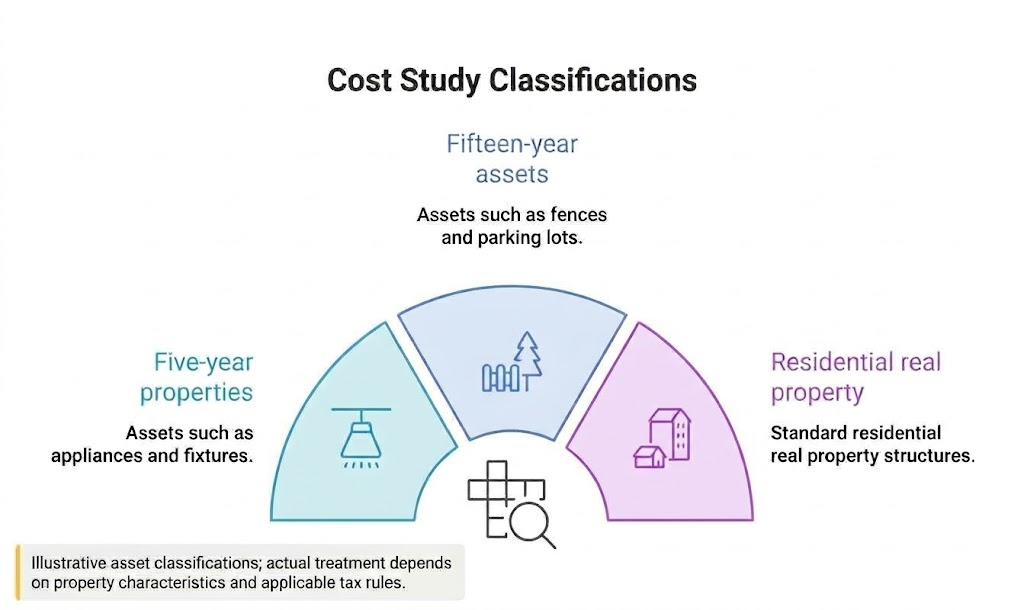
Several classifications commonly arise from these detailed cost studies:
- Five-year properties like appliances and fixtures.
- Fifteen-year assets such as fences and parking lots.
- Standard residential real property structures.
Engaging in ongoing tax planning for real estate investors may help you evaluate whether accelerated depreciation fits your current acquisition schedule. Accelerated depreciation may increase deductions in earlier tax years for qualifying assets. The current-year tax effect depends on applicable depreciation provisions, placed-in-service dates, the taxpayer’s circumstances, and any limitations on the use of resulting losses.
What Rules Govern the Deferral of Capital Gains Through Like-Kind Exchanges
Section 1031 may permit deferral of certain gains when qualifying real property held for investment or productive use in a trade or business is exchanged for other qualifying real property. Deferred exchanges generally require an appropriately structured transaction, including arrangements designed to prevent the taxpayer from receiving or controlling the exchange proceeds.
For a qualifying deferred exchange, replacement property generally must be identified within 45 days after transferring the relinquished property. The replacement property generally must be received by the earlier of 180 days after that transfer or the due date of the taxpayer’s federal income tax return, including extensions, for the year of the transfer.
Integrating proactive tax planning for real estate investors can provide clarity on how these timelines apply to your current portfolio transactions. Reviewing these rules early can support your cash management strategies before you initiate a property sale.
Who Qualifies for Real Estate Professional Status Under IRS Guidelines
Qualified individuals who meet Real Estate Professional Status requirements may be able to apply rental real estate losses against certain W-2 wages or ordinary business income. To qualify, a taxpayer must meet specific hourly participation requirements defined by federal tax law.
To qualify as a real estate professional for federal passive activity purposes, an individual generally must perform more than 750 hours of qualifying services in real property trades or businesses in which the individual materially participates and satisfy the requirement that more than half of the individual’s personal services in trades or businesses are performed in those qualifying real property activities.
Additional rules apply to employee services and married taxpayers. Meeting these tests does not automatically make all rental losses nonpassive. The taxpayer must also establish material participation in the relevant rental activity, subject to applicable election and grouping rules.
Discussing these specific criteria during your tax planning in Houston sessions can help you understand how the IRS evaluates participation claims. Maintaining detailed, contemporaneous records of your daily activities remains a vital practice to support this tax classification.
How Do Passive Activity Rules Apply to Short-Term Rentals
Under federal passive activity rules, an activity involving property with an average customer use of seven days or less generally may be excluded from the definition of a rental activity. However, the activity is not automatically nonpassive. The taxpayer must evaluate whether the applicable material participation requirements are satisfied.
Material participation is determined under several alternative tests. One test generally involves participating in the activity for more than 500 hours during the year, but other tests may apply depending on the taxpayer’s participation and the activities of other individuals.
Utilizing tax planning for real estate investors can support your efforts to document your participation hours properly throughout the year. For example, a self-employed consultant with variable monthly contracts might purchase a vacation rental and manage the bookings directly. Without keeping contemporaneous logs that substantiate their participation hours, that individual could face challenges during an IRS review.
How Do Transaction Structure Changes Affect Your Long-Term Obligations
The holding period and tax classification of real estate can affect how gain is reported. Property held for more than one year may qualify for long-term capital gain treatment, but depreciation-related gain, dealer activity, and other tax provisions can result in different treatment for some or all of the gain.
Additionally, the way you classify your real estate activities can influence whether the IRS considers you a dealer in property. Real estate held primarily for sale to customers in the ordinary course of a trade or business may be treated differently from property held for investment. Depending on the taxpayer’s circumstances, gains may be ordinary business income, and applicable self-employment tax considerations may arise.
Implementing proactive tax planning for real estate investors can assist you in analyzing these classification boundaries well before you execute a sale. Reviewing your transaction history can help support your preferred filing classifications during annual business tax preparation.
How Do Federal Interest Rules Apply to Property Portfolios
Section 163(j) may limit the amount of business interest expense deductible in a tax year. Certain taxpayers qualify for a small-business exception based on applicable gross receipts rules. Eligible real property trades or businesses may also elect out of the limitation, subject to requirements that can affect depreciation methods for certain property.
According to the official IRS interest expense guidelines, certain small businesses are exempt from interest limitations based on statutory gross receipts thresholds. Evaluating these revenue thresholds annually helps determine how these interest deduction rules apply to your current debt structures.
Several factors commonly influence how these interest rules apply:
- The total annual gross receipts of your business.
- Your specific entity classification for tax purposes.
- The total volume of investment debt carried.
Proactive tax planning for real estate investors can support the alignment of your federal interest deductions with your overall business objectives. Organizing these financial records throughout the year helps maintain consistent documentation for your annual filings.
How Can Other States’ Pass-Through Entity Taxes Affect Investors
Certain states permit eligible pass-through entities to elect entity-level income taxation, which may affect the federal treatment of qualifying state tax payments. Texas does not impose an individual state income tax or offer the same elective pass-through entity income tax structure. Investors with qualifying activities in other states may need to evaluate the applicable state election requirements and federal tax consequences.
How Do Regional Tax Rules in Texas Impact Real Estate Portfolios
Certain entities engaged in real estate activities in Texas may have state franchise tax reporting obligations, including applicable Public Information Reports or Ownership Information Reports. Texas does not impose an individual state income tax, but local property taxes and other applicable state and local taxes may affect real estate operations.
Additionally, local property tax assessments represent a significant ongoing operating cost for real estate investors in the state. Tracking these expenditures consistently supports more organized budgeting and helps prepare your records for annual consultations.
Integrating these regional factors into your tax planning for real estate investors can support a more balanced approach to managing your portfolio. Coordinating federal and Texas tax reporting can provide an opportunity to evaluate differences in applicable tax treatment and identify supporting information needed for each filing.
Tax Planning for Real Estate Investors FAQs
What are some common tax strategies for property owners?
Real estate owners may use depreciation deductions, like-kind exchanges, and interest expense treatment when managing their tax obligations. The potential tax impact of these provisions varies based on individual financial circumstances and the details of each transaction.
Can you sell a house to a family member for one dollar?
Transferring real estate to a family member for substantially less than fair market value may create a gift or part-sale, part-gift transaction for federal tax purposes. The tax consequences depend on the property’s value, adjusted basis, any liabilities involved, and other circumstances. Gift tax reporting may also be required.
What is the purpose of a cost segregation study?
Cost segregation examines a property’s individual components and assigns eligible assets to shorter depreciation periods. By accelerating depreciation on qualifying items, property owners may claim larger deductions during the earlier years of ownership.
How does a like-kind exchange defer taxes?
A qualifying Section 1031 exchange may defer recognition of certain gains when eligible real property held for investment or business use is exchanged for other qualifying real property. Deferred exchanges must meet specific structural and timing requirements, including restrictions on the taxpayer’s receipt or control of exchange proceeds.
Coordinating Real Estate Tax Planning and Reporting
Real estate tax planning involves evaluating depreciation, rental activity classifications, property dispositions, financing arrangements, and applicable federal and state reporting requirements.
Periodic tax reviews can provide opportunities to assess the tax consequences of significant transactions and maintain relevant supporting records. Dabney Tax & Accounting Services provides CPA-led tax planning, preparation, and accounting services for real estate investors and businesses in Houston and throughout Texas.


