

Outsourcing financial accounting services is becoming a practical consideration for businesses in Texas. Small and mid-sized companies in Pearland, Memorial, Bellaire, and nearby Houston communities often find themselves stretched thin managing bookkeeping alongside core business operations. That pressure is one reason more business owners consider outsourcing.
Outsourcing can offer access to professional support, adjust how costs are structured, and allow internal teams to focus more on core business activities. However, every company’s situation is different, and outsourcing decisions should be reviewed based on the business’s size, industry, financial complexity, and long-term goals.
The Cost Structure Shift That Outsourcing Creates
One of the first reasons we see businesses explore outsourcing is cost. Hiring full-time accounting staff means committing to salaries, payroll taxes, health benefits, retirement contributions, and office space. For companies in Houston, this fixed overhead can add up quickly, especially when the workload fluctuates throughout the year.
When a business chooses to outsource financial accounting services, the cost structure often shifts from fixed to variable. Instead of paying for full-time staff year-round, the business pays for the level of support it actually needs. According to the BLS, demand for accountants and auditors remains steady across industries as businesses continue to need consistent financial reporting and reporting requirements.
Access to Accounting Support Without the Hiring Process
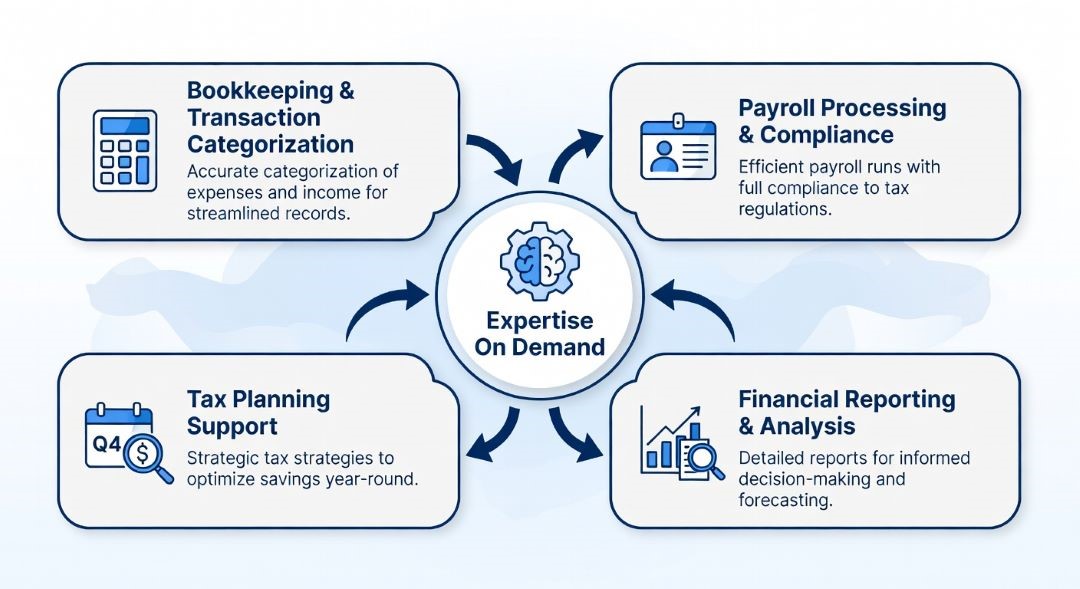
Another common reason companies outsource financial accounting services is access to expertise. A small business may not need a full-time controller or senior accountant, but it may still benefit from that level of knowledge during month-end close, tax planning, or financial review. Outsourcing firms typically employ teams with different areas of focus with different areas of focus, including:
- Bookkeeping and transaction categorization
- Payroll processing and compliance
- Tax planning support
- Financial reporting and analysis
For businesses managing year-end tax obligations alongside ongoing accounting needs, tax planning may be part of a broader outsourcing relationship that includes regular financial review and proactive planning discussions.
How Outsourcing Can Support More Consistent and Timely Reporting
When businesses outsource financial accounting services, they often gain access to more structured processes, better software tools, and teams that are focused full-time on accounting tasks. That can lead to faster close cycles, more consistent reports, and fewer surprises when it is time to review financial performance.
Outsourcing does not guarantee perfection, but it may help reduce the likelihood of errors and delays that come from understaffed or overstretched internal teams.
A Houston Business Scenario That Reflects This Decision
A few years ago, we met a growing consulting firm in Pearland that was managing accounting with a part-time bookkeeper who handled transaction entry but did not have the capacity or expertise to prepare monthly financial statements or support tax planning. As the business added clients and staff, the owner found it harder to understand profitability by project.
Rather than hiring a full-time accountant, the firm chose to outsource financial accounting services to a team that could handle bookkeeping, monthly close, and financial reporting. That shift provided the owner with more timely reports, clearer visibility into project margins, and more structured support during tax season without adding payroll overhead.
This example reflects a common pattern across Houston and nearby Texas communities. Outsourcing may help address gaps without forcing the business to commit to permanent internal hires.
Why Scalability Matters for Growing Businesses
For businesses in Texas, the growth can quickly outpace internal capacity. That is another reason companies outsource financial accounting services. Outsourced providers can support:
- Seasonal revenue swings
- Expansion into new service lines
- Temporary slowdowns or staff transitions
For businesses managing both business and personal tax filings during periods of growth, individual tax preparation may also be relevant, especially when owner income is tied to business performance.
How Compliance and Risk Are Affected
To our clients, we always say that businesses are generally required to meet filing and reporting obligations. Businesses need to file taxes on time, report payroll consistently, manage vendor payments correctly, and maintain records that can support audits or reviews if needed.
Outsourcing firms that specialize in accounting are typically more familiar with compliance requirements, software updates, and changing tax rules. That familiarity may help businesses stay organized around filing deadlines, incorrect filings, or incomplete records.
For businesses managing year-end tax obligations, business tax preparation may be part of a broader outsourcing relationship that includes bookkeeping, payroll, and financial reporting throughout the year.
FAQs
What are the main benefits of outsourcing financial accounting services?
Common benefits include reduced overhead, access to professional expertise, improved reporting and timeliness, scalability to match business activity, and more time for leadership to focus on core business activities.
Does outsourcing mean losing control over financial records?
Not if the relationship is structured properly. Business owners should still review reports, approve transactions, and stay involved in financial decisions. Outsourcing handles execution, not oversight.
How much does it typically cost to outsource accounting services?
Cost varies based on the complexity of the business and the provider’s pricing model. Some firms charge monthly retainers, others use hourly rates, and some offer flat fees for specific tasks.
Can outsourced accounting services scale with business growth?
Yes, one of the primary advantages of outsourcing is the ability to adjust the level of support based on business volume, staffing changes, or seasonal activity without needing to hire or lay off internal employees.
Final Considerations
The decision to outsource financial accounting services is often driven by practical needs rather than theory. Whether it is reducing fixed costs, improving monthly reporting, or preparing for the next phase of growth, outsourcing can offer flexibility and professional support that internal teams may struggle to provide.
The key is understanding what outsourcing can realistically deliver and setting expectations from the start. If your business is exploring outsourced accounting, bookkeeping, tax preparation, or financial reporting support, our team at Dabney Tax & Accounting Services works with Houston businesses to provide services aligned with their reporting and operational needs..


