

Finding the right person to manage your finances can feel overwhelming, and many business owners and freelancers in Houston ask how to find a good accountant who not only files taxes but also supports clear financial records.
Knowing what services to consider, like business tax preparation or financial reporting, may help make this process more approachable.
Why Choosing the Right Accountant Matters
An accountant is more than someone who fills out forms or files taxes. They can help organize records for financial reporting, prepare for tax season, and help organize financial information related to more complex transactions.
Choosing someone familiar with your industry, whether you’re operating a small Houston-based service business, freelancing, or working in oil & gas, can make handling financial matters less stressful.
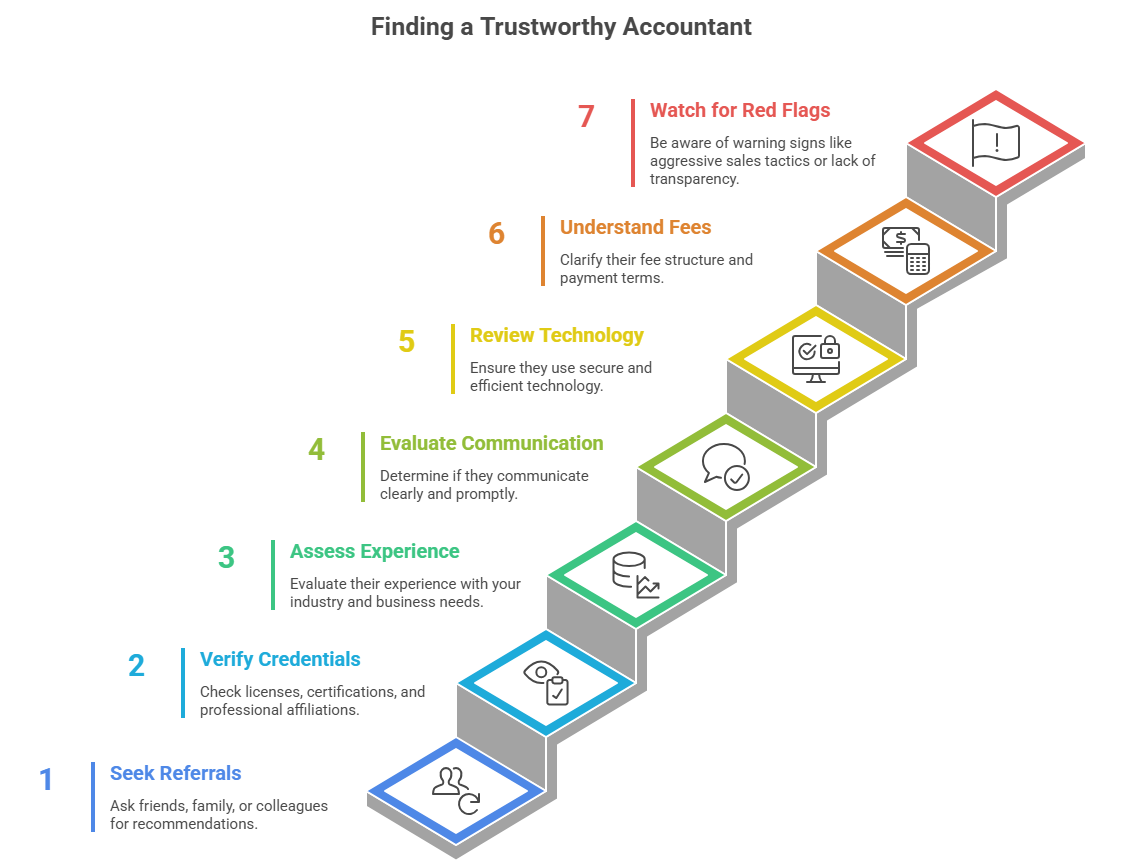
Step 1. Seek Personalized Referrals
The first step in “How to find a good accountant” is asking for recommendations. Talk to peers, other business owners, or professionals like attorneys or bankers who understand your field. Local Houston Chambers of Commerce and networking groups can also provide helpful leads.
For instance, a small oilfield services company in the Energy Corridor connected with an accountant through a referral network, helping them access professionals with relevant industry experience for quarterly reporting needs.
Step 2. Verify Credentials and Reputation
Once you have potential candidates, check their credentials. Look for Certified Public Accountant (CPA) or Enrolled Agent (EA) status, and verify CPA licenses through state boards or confirm enrolled agent status through the IRS directory.
Also, consider online profiles and local reputation. While LinkedIn endorsements or Yelp reviews can help, personal referrals often carry more weight. Houston freelancers or small business owners may benefit from accountants offering individual tax preparation support.
Step 3. Assess Experience and Industry Fit
Not all accountants have experience in every field. When exploring how to find a good accountant, ask about experience with businesses like yours. Freelancers may need support with self-employment deductions and quarterly filings, while oil & gas contractors might require guidance on royalty reporting or industry-specific expense tracking.
Services such as financial reporting & analysis may help organize business records and provide insights into past performance, making it easier to manage financial information over time.
Step 4. Evaluate Communication Style
A good accountant communicates clearly and responds promptly. Ask how they explain financial concepts. Do they simplify reports? Can they provide relevant insights without heavy jargon?
Houston freelancers managing multiple clients often benefit from accountants who break down reporting and filing requirements into understandable terms and clarify how different reports relate to their income streams.
Step 5. Review Technology and Security Practices
Many modern accountants use secure accounting and document-sharing software for bookkeeping, tax preparation, and reporting. Ask about the tools they use and how client data is handled.
Small business owners in Houston managing multiple projects may benefit from cloud-based reporting tools that reduce manual work and make collaboration with accountants smoother.
Step 6. Understand Fee Structures
Accounting services may be billed hourly, at flat fees, or through monthly retainers. Clarifying this upfront may help avoid confusion later. Houston-based business owners often appreciate transparent billing, especially in industries like oil & gas or service-based businesses where income and project timing may fluctuate.
Step 7. Watch Out for Red Flags
Certain warning signs may indicate potential issues when learning how to find a good accountant:
- Promises of unusually large tax refunds.
- Fees tied to a percentage of a refund.
- Reluctance to sign returns or provide valid credentials.
Federal oversight discussions often note that while licensed CPAs and enrolled agents are subject to specific regulation, a large share of paid preparers operate without baseline education or testing requirements.
A Realistic Houston Case Example
Let us share the case of our client, who is a freelance graphic designer based in Montrose, Houston. During tax season, she was struggling to track multiple income streams. She ultimately chose our team after verifying credentials and reviewing service scope.
Our team helped her organize records for individual tax preparation, making filing deadlines easier to manage and giving her a clearer picture of her income and expenses.
Similarly, a small oil & gas contractor in the Energy Corridor used specialized business tax preparation services to handle royalty reporting and other industry-specific filings. By incorporating structured recordkeeping and reporting tools, the client was able to concentrate on operations while maintaining well-organized financial records.
How to Make the Final Decision
Once you’ve narrowed down candidates, schedule consultations. Focus on:
- Clear and understandable communication.
- Relevant experience in your industry.
- Transparent fee arrangements.
- Comfort with technology and data security practices.
If someone feels responsive, knowledgeable, and invested in supporting your business, you may have found a suitable fit.
FAQs
How to find an accountant you can trust?
Start with personal referrals, verify credentials, assess industry experience, review communication style, and confirm secure technology use and transparent fees. Services like business or individual tax preparation may also indicate their expertise.
What credentials should a good accountant have?
Look for Certified Public Accountant (CPA) or Enrolled Agent (EA) status. Experience in your industry, freelance work, oil & gas, or service businesses in Houston can also be useful.
How do I know if an accountant is proactive?
A proactive accountant offers insights beyond filing taxes, may help identify potential reporting considerations earlier, and helps organize financial reporting efficiently.
Should I prioritize technology when choosing an accountant?
Yes, secure, modern software may support bookkeeping, tax preparation, and reporting that may make collaboration easier for small businesses and freelancers.
Conclusion
Finding the right accountant can feel challenging, especially when you’re juggling multiple projects or industries in Houston. Learning how to find a good accountant is about working with a professional who understands your needs, communicates clearly, and can guide you through financial recordkeeping and filings.
At Dabney Tax & Accounting Services, we support local businesses, freelancers, and professionals in Houston by helping organize records, manage tax filings, and provide insights through practical financial reporting. Our approach is focused on making accounting and tax processes easier to navigate, so you can spend more time on your business while staying confident in your financial information.


