

Establishing an organized accounting system for startups is an important step for founders during the early stages of a business. While operational demands often take center stage, developing sound financial recordkeeping practices early can provide a stronger foundation as the business grows.
Founders across Houston and Texas may navigate tight cash flows, initial hiring decisions, and evolving business models. Structured financial records can provide useful information for management decisions and help businesses address accounting and tax responsibilities as transaction volumes grow.
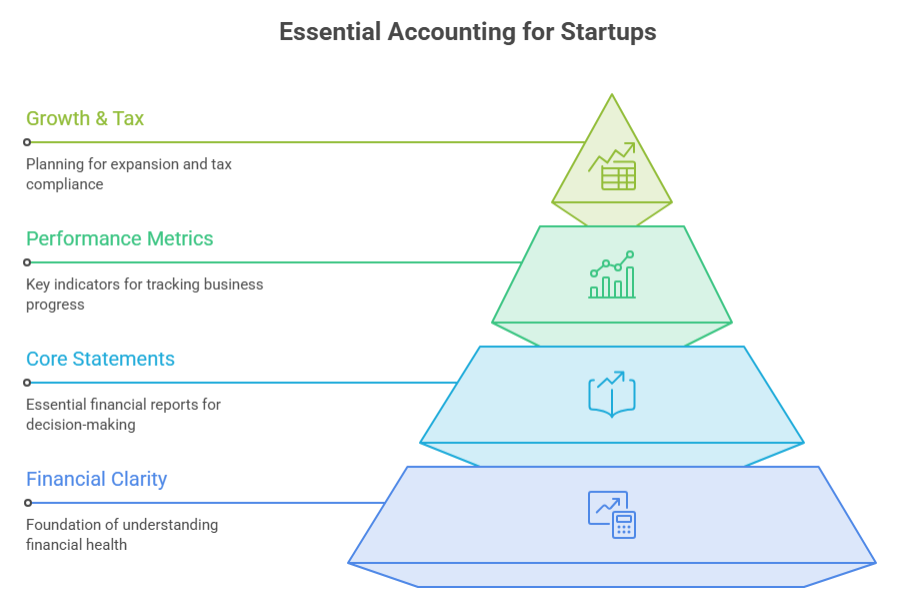
Laying the Groundwork for Financial Clarity
The process of setting up accounting for startups begins with establishing clean boundaries between business activities and personal finances. Mixing funds is a common hurdle for new founders, but opening a dedicated commercial bank account creates an organized financial trail immediately.
Selecting appropriate accounting tools and defining standard procedures early can reduce the amount of financial cleanup that may be needed as transaction volume and complexity increase. A few foundational steps every emerging business should take include:
- Opening separate business checking and credit card accounts.
- Selecting a scalable cloud accounting platform to track daily transactions.
- Establishing a standardized chart of accounts tailored to the specific industry.
- Creating a centralized digital repository for all vendor invoices and client receipts.
Taking these administrative actions early creates a dependable structure, allowing leadership to focus on product development and market traction.
When financial complexity begins to exceed the business’s internal capacity, fractional CFO support can provide additional guidance in areas such as budgeting, forecasting, cash-flow planning, and financial analysis without requiring the business to add a full-time CFO position.
Understanding the Core Financial Statements
Three primary financial statements, the income statement, balance sheet, and statement of cash flows, provide different perspectives on a business’s financial activity
and position. In the context of accounting for startups, regular reconciliations help keep these statements current and meaningful for decision-makers.
The income statement outlines revenue and operating expenses over a specific timeframe, indicating whether operations are generating an operating profit. The balance sheet offers a snapshot of company assets, outstanding liabilities, and shareholder equity at a specific point in time.
The statement of cash flows reports cash inflows and outflows from operating, investing, and financing activities and can provide useful information about the company’s liquidity and use of cash. Maintaining these records through reliable bookkeeping and payroll services helps founders review current numbers rather than relying on rough estimates.
Tracking Essential Performance Metrics
Beyond reviewing basic financial statements, founders who invest in proper accounting for startups often find that tracking key performance metrics helps identify operational trends early. Monitoring unit economics and capital usage allows leadership to adjust spending before cash constraints become critical.
Key indicators worth monitoring regularly include:
- Burn rate, which measures the net amount of cash expended each month.
- Runway, which calculates how many months the business can operate at its current spending pace.
- Gross margin, which reflects the percentage of revenue retained after direct production costs.
- Customer acquisition cost, which evaluates marketing and sales expenses relative to new customer additions.
For example, a growing distribution business may experience increasing sales while simultaneously facing cash-flow pressure from inventory purchases, customer payment timing, or other working-capital demands. Tracking margins, receivables, inventory, and cash flow with financial reporting and analysis can provide management with additional information for evaluating those pressures.
Preparing for Growth and Tax Obligations
The long-term value of accounting for startups goes beyond keeping financial records organized or meeting basic compliance requirements. As a business grows, its financial activity becomes more complex, and tax responsibilities can expand to include state and local franchise filings, payroll withholding, quarterly estimated payments, and other reporting obligations. Having a reliable accounting process in place early gives the business a clearer financial foundation as these responsibilities increase.
According to IRS Publication 583, businesses must choose an accounting method that clearly shows income and maintain records and supporting documents for their tax reporting.
Good recordkeeping also gives owners better visibility into income, expenses, payroll, and tax liabilities throughout the year rather than leaving everything to tax-filing season.
For startups preparing to scale, maintaining organized books from the beginning can make it easier to respond to changing tax requirements, evaluate financial performance, and provide the documentation needed for lenders, investors, or tax professionals.
FAQs
Is AI replacing CPAs for startup accounting?
AI and automation tools can assist with tasks such as data entry, transaction categorization, and portions of the reconciliation process. A CPA can provide professional judgment, tax and accounting guidance, and analysis based on the specific facts and circumstances of the business.
Is working with a CPA still worth it in 2026 for an early-stage business?
A CPA can be valuable to an early-stage business when the company needs professional assistance with accounting, tax compliance, planning, financial reporting, or increasingly complex transactions. CPA involvement can also provide founders with professional guidance as the business’s financial and tax responsibilities evolve.
What is the most critical financial statement for a new startup?
Although each financial statement provides different information, the cash flow statement is especially important for startups because it shows how much cash the business has available, how quickly that cash is being used, and whether upcoming expenses can be covered.
When should a founder transition from spreadsheets to dedicated accounting software?
Dedicated accounting software may become appropriate once transactions occur regularly or the business needs more structured processes for reconciliations, financial reporting, invoicing, payroll integration, or transaction documentation.
Building a Resilient Base for Long-Term Growth
Establishing structured accounting for startups gives emerging companies a clearer framework for maintaining financial records and understanding financial activity. Separate accounts, regular reconciliations, current financial reports, and appropriate performance metrics can provide useful information as the business evolves.
For founders in Houston and throughout Texas seeking professional support with their accounting systems, Dabney Tax & Accounting Services provides CPA-led bookkeeping, tax, financial reporting, and advisory services for growing businesses.


