

The decision of hiring a CPA for a small business is an important decision for many Houston entrepreneurs as their businesses grow and financial needs become more complex.
While you may have handled the books yourself in the early days, there comes a point where professional expertise is no longer a luxury but a necessity. A CPA may offer more than just tax preparation; they may provide ongoing support as the business evaluates financial decisions over time.
Why Small Businesses Start Looking for a CPA
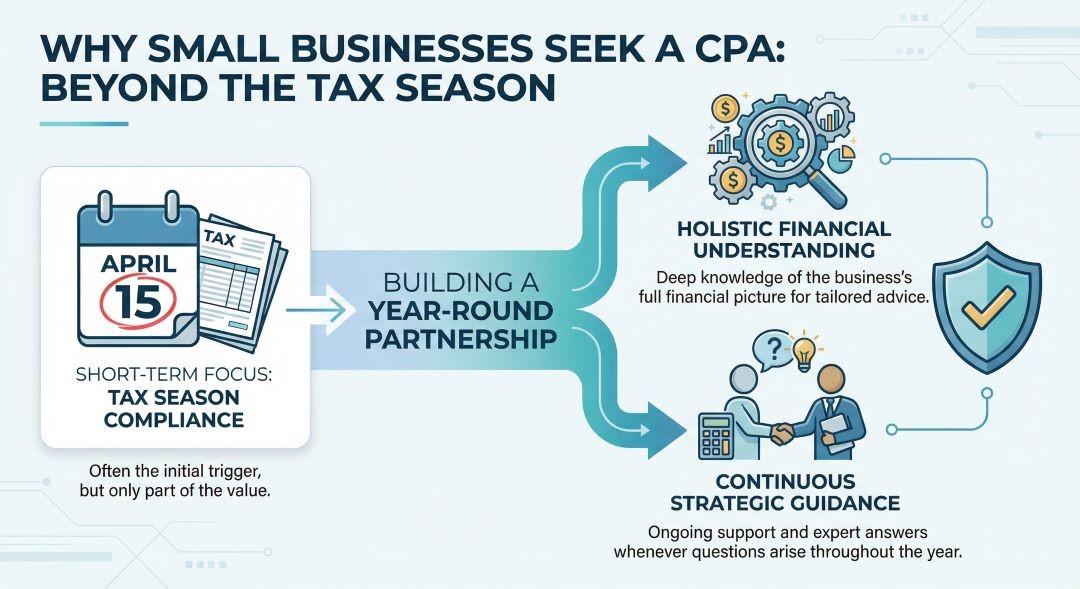
The reasons vary. Some businesses in Downtown Houston, Midtown, or Cypress outgrow their bookkeeper and need someone who can handle tax preparation and planning. Others are preparing for growth, seeking a loan, or dealing with new payroll and sales tax obligations. Still others simply want more confidence in how financial records are maintained and reported.
Hiring a CPA for a small business is often about more than just getting through tax season. n our experience, it is often about building a relationship with someone who understands the business’s financial picture and can offer guidance when questions come up throughout the year.
For businesses trying to understand their financial position more clearly, financial reporting analysis may support better visibility into revenue, expenses, and profitability trends over time.
What to Look for Before You Start Interviewing
Before reaching out to candidates, it helps to know what the business actually needs. Is the priority getting tax returns filed correctly? Is it ongoing tax planning? Does it help organize books that have fallen behind? Or is it financial planning considerations related to growth, hiring, or equipment purchases?
Clarity around those questions makes it easier to evaluate whether a CPA is the right fit. According to the Texas State Board of Public Accountancy, CPAs in Texas must meet education, exam, and experience requirements and maintain continuing professional education to stay licensed.
When thinking about hiring a CPA for a small business, it also helps to consider whether industry experience matters. A CPA who works regularly with construction companies in The Heights may understand job costing and contractor payments differently than one who works primarily with medical practices or e-commerce businesses in Sugar Land.
Questions That Help You Evaluate Fit
Some useful questions include asking about experience with businesses of similar size or industry, how the CPA stays current on tax law changes, what software platforms they work with, how often they communicate with clients, and how they structure fees.
For small businesses in League City, Friendswood, or Baytown that need help with year-end filings, business tax preparation may be one of the core services to discuss during the initial conversation.
A Real Houston Example We Encountered
A few years back, a small retail business in Katy came to us after working with a CPA who only prepared their annual tax return. The owner felt like they were always guessing about quarterly estimates, unsure whether expenses were being categorized correctly, and unclear about whether the business structure still made sense as revenue grew.
After switching to a CPA relationship that included year-round communication, quarterly check-ins, and proactive planning discussions, the owner had a clearer understanding of the tax picture before year-end arrived. That did not eliminate every question, but it helped the business better understand its financial position and helped the business make more informed decisions about hiring and inventory purchases.
This reflects a common pattern. Hiring a CPA for a small business is often most valuable when it goes beyond annual filing and includes ongoing support that fits the pace of the business.
How to Spot Warning Signs Early
Not every CPA is the right match. Some warning signs include slow response times, difficulty explaining complex topics in plain language, unfamiliarity with the business’s software or industry, or reluctance to discuss planning beyond the current tax year.
Another warning sign is a lack of planning focus. If a CPA only talks about last year’s return and never asks about the current year or future goals, that may suggest a reactive relationship rather than a strategic one.
For businesses interested in planning that goes beyond filing, tax planning may be part of a broader relationship that includes regular review, estimated tax guidance, and year-end strategy discussions.
When Hiring a CPA Makes the Most Sense
In our experience, hiring a CPA for a small business is not always the right step for every company at every stage. A brand new sole proprietor with minimal expenses and straightforward income may be fine with tax software or a simpler preparer for the first year or two.
But as the business grows, the value of a CPA often becomes clearer. The decision is usually about timing, complexity, and how much the owner wants or needs professional guidance. For businesses in Baytown, Friendswood, or The Woodlands managing multiple financial responsibilities, a CPA may help support more structured financial processes to the financial side of operations.
FAQs
When should a small business consider hiring a CPA?
Many small businesses consider hiring a CPA when tax filing becomes more complex, when growth creates new financial questions, or when the owner wants proactive planning support rather than just annual filing.
What is the difference between a CPA and a bookkeeper?
A bookkeeper generally handles transaction recording and account reconciliation. A CPA is a licensed professional who can offer tax preparation, planning, compliance support, and ongoing financial planning support.
How much does it typically cost to hire a CPA for a small business?
Cost varies based on the services needed. Some charge hourly rates, others use monthly retainers, and some offer fixed fees for specific services like tax return preparation.
What should a small business ask when interviewing a CPA?
Useful questions include asking about industry experience, communication style, software familiarity, approach to planning, fee structure, and how the CPA stays current on tax law changes.
The Bottom Line
Hiring a CPA for a small business is often an important step as financial reporting, tax obligations, and planning needs become more complex. The relationship may involve more than annual tax preparation and can include ongoing support aligned with the business’s needs.
Choosing the right CPA takes time, and the right fit often depends on communication style, service scope, and experience working with similar businesses. At Dabney Tax & Accounting Services, our team provides accounting and tax support for Houston small businesses, with services designed to align with each client’s financial reporting and planning needs.


