

Finding a qualified tax preparer near me in Houston, TX is a decision that deserves more thought than most people give it. Houston’s size and diversity mean there is no shortage of licensed CPA firms, but the quality and scope of those options vary considerably.
Houston-area individuals and business owners have many choices when selecting a tax professional. Evaluating credentials, services, communication practices, and representation capabilities upfront can help taxpayers determine whether a preparer is appropriate for their needs.
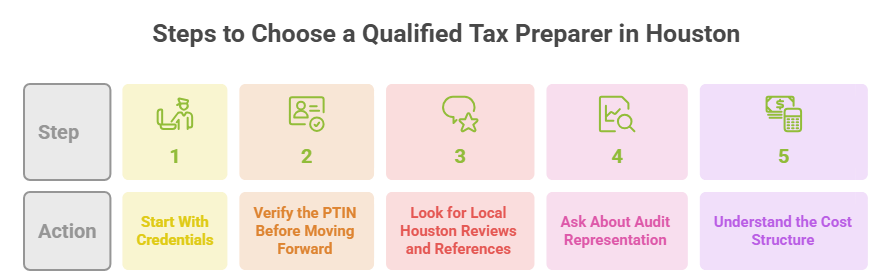
Start With Credentials, Not Convenience
The most important factor when searching for a tax preparer near me in Houston, TX is the professional’s credentials rather than proximity or price. A Certified Public Accountant holds a state-issued license, has passed a rigorous exam, and maintains ongoing continuing education requirements. An Enrolled Agent is a licensed tax practitioner who specializes in taxation and holds unlimited representation rights before the IRS.
Annual Filing Season Program participants are tax return preparers who meet specified IRS continuing education requirements and receive an Annual Filing Season Program Record of Completion. Their representation rights before the IRS are limited compared with the unlimited representation rights of CPAs, Enrolled Agents, and attorneys.
According to the IRS directory of federal tax return preparers, taxpayers can search for credentialed professionals by ZIP code and verify credential type before engaging anyone.
Verify the PTIN Before Moving Forward
When it comes to finding a qualified tax preparer near me, checking the preparer’s credentials should be one of the first steps. Every paid tax preparer is required by the IRS to hold a valid Preparer Tax Identification Number (PTIN).
While a PTIN is a basic requirement rather than a professional credential, it provides a useful starting point when evaluating a preparer. A preparer who cannot provide a PTIN or asks a client to sign a blank return should be considered a significant red flag.
The IRS Directory of Federal Tax Return Preparers with Credentials and Select Qualifications can be used to search for preparers who hold certain recognized credentials or qualifications. Taxpayers can also ask a prospective paid preparer to confirm that they hold a current PTIN.
Look for Local Houston Reviews and References
Once credentials are confirmed, reviewing local feedback from other Houston area clients tends to surface useful information about communication style, reliability, and overall experience. Online reviews can provide additional information about clients’ reported experiences with communication, responsiveness, and service. Reviews should be considered alongside credentials, professional licensing, services offered, and direct conversations with the prospective preparer.
The reviews most worth paying attention to are those describing the ongoing relationship rather than just the outcome of a single filing. A preparer who communicates well and is available for questions throughout the year tends to generate feedback that reflects a sustainable professional relationship rather than a one-time transaction.
For business owners who want to extend that relationship further, connecting bookkeeping and payroll functions through bookkeeping services alongside tax preparation tends to create a more integrated and manageable financial process throughout the year.
Understand the Cost Structure
Understanding how fees are structured tends to prevent surprises after the work is done. Tax preparation fees vary based on the complexity of the return, number and types of income sources, schedules and forms required, business activities, state filing requirements, and completeness of the taxpayer’s records. Prospective clients should ask what is included in the quoted fee and what circumstances may result in additional charges.
Any preparer who charges a fee based on a percentage of the tax refund should be approached with caution. The IRS considers this a problematic fee structure because it may create an incentive to inflate refunds rather than prepare a compliant return.
Free Tax Help Resources in Houston
Eligible Houston-area taxpayers may have access to free tax preparation through IRS-sponsored Volunteer Income Tax Assistance (VITA) and Tax Counseling for the Elderly (TCE) programs and participating community organizations. Availability, locations, and eligibility requirements can change by filing season, so taxpayers should verify current information before visiting a site.
Taxpayers with business activities, multiple income sources, or other complex circumstances should confirm that the program or preparer they select can handle the specific forms and tax issues involved in their return.
Connecting With the Right CPA for Ongoing Support
One distinction worth making when searching for a tax preparer near me in Houston, TX is the difference between a preparer who files returns and a CPA who provides year-round support.
For taxpayers with growing complexity, a CPA who provides year-round planning may offer services beyond those included in a filing-only engagement, such as estimated tax planning, business tax discussions, and assistance with tax questions that arise during the year.
For example, someone transitioning from traditional employment to self-employment may encounter new tax considerations involving estimated tax payments, business expense documentation, self-employment tax, and recordkeeping. Working with a tax professional familiar with self-employed taxpayers can help the individual understand these additional filing and planning responsibilities.
Support through individual tax preparation guidance can provide the connection between annual filing and year-round financial clarity.
FAQs
How can I choose a reputable tax preparer near me in Houston, TX?
Start by confirming that a paid preparer has a current PTIN and reviewing any professional credentials they hold, such as CPA or Enrolled Agent status. Consider their experience with your tax situation, availability, fee structure, electronic filing practices, and IRS representation rights.
What is the difference between a CPA and an Enrolled Agent?
Both CPAs and Enrolled Agents have unlimited representation rights before the IRS. CPAs are licensed by state boards of accountancy and may provide services across accounting, tax, and other financial areas. Enrolled Agents are federally licensed by the IRS with a credential specifically focused on federal taxation.
What should I bring to my first meeting with a tax preparer?
Commonly needed documents include W-2 and 1099 forms, mortgage interest statements if applicable, records of deductible expenses, and a copy of the prior year return. Having these organized before the appointment tends to make the preparation process more efficient.
Are there free tax preparation options available in Houston?
Yes. The BakerRipley Tax Services program offers free filing assistance at select Harris County Public Library locations for qualifying individuals. These options tend to work best for straightforward returns within the eligible income range.
The Right Preparer Makes Houston Tax Season Considerably More Manageable
Choosing a qualified tax preparer near me in Houston, TX comes down to credentials, communication, representation capability, and whether the relationship is structured to support more than just an annual filing. Those who want a CPA-led approach that extends beyond the return itself, connecting with the right professional before filing season begins tends to make the entire process more organized.
If you are ready to take that step, Dabney Tax & Accounting Services is available to help. We work with individuals and businesses across Houston who want their tax preparation handled by a credentialed CPA who is invested in the relationship year-round, not just during filing season.


