

Knowing the right questions to ask tax accountant candidates before hiring one can save a business owner or individual filer considerable time, money, and stress. The right questions reveal not just credentials but communication style, industry familiarity, and whether the professional is built for a transactional filing relationship or a genuine year-round partnership.
Individuals and business owners sometimes change tax professionals because the services they need do not match the relationship their current preparer is structured to provide. Asking the right questions upfront can help identify that type of mismatch before an engagement begins.
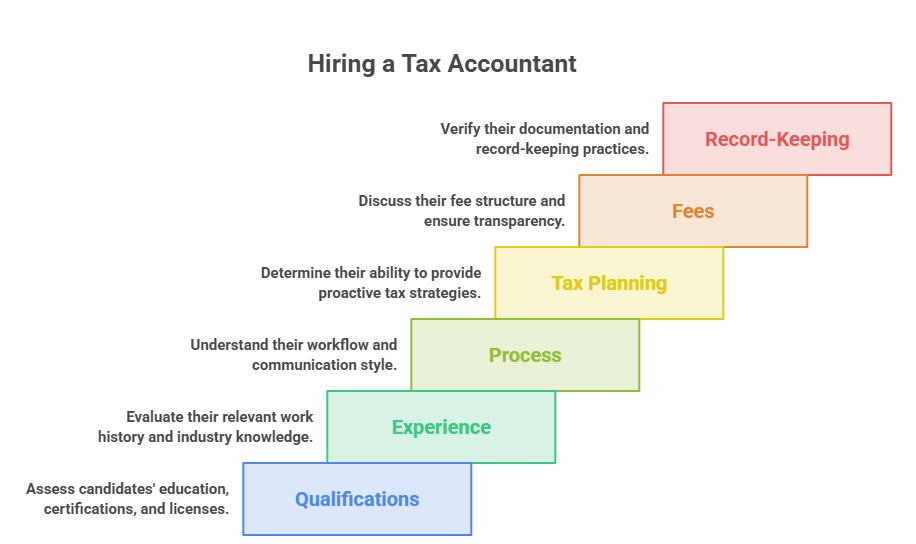
Questions About Qualifications and Credentials
What Professional Credentials Do You Hold?
A Certified Public Accountant has met state licensing requirements that include education, examination, experience, and ongoing professional requirements. CPAs also have unlimited representation rights before the IRS. Enrolled Agents and attorneys are other credentialed professionals with unlimited IRS representation rights.
Every paid preparer should also hold a valid Preparer Tax Identification Number issued by the IRS, which can be verified through the IRS directory. Asking specifically about credentials and verifying them independently is a reasonable first step in evaluating any candidate.
How Do You Stay Current With Tax Law Changes?
Tax law changes regularly, and a professional who is not actively keeping up with those changes may miss developments that affect a client’s return or planning strategy. Asking how a candidate stays current, whether through continuing education or regular review of IRS guidance, gives a sense of how seriously they approach ongoing professional development.
Questions About Experience and Industry Fit
What Experience Do You Have With My Specific Situation?
This is one of the most important questions to ask tax accountant candidates. A general practitioner who handles straightforward individual returns may not be the right fit for a business owner with an S Corporation or a Houston-based professional with oil and gas royalty income.
Asking specifically about experience with the relevant industry, business structure, or income type tends to reveal quickly whether the candidate has genuine familiarity or is approaching the situation as a general case.
Houston business owners in industries such as construction, healthcare, and energy services may find it helpful to work with a CPA familiar with the accounting, tax, and financial considerations common to their industry
Do You Have Other Clients in My Industry?
A CPA who regularly works with businesses similar to yours is more likely to understand the common financial challenges, deductible expense categories, and planning considerations that apply to that industry specifically. This follow-up question can surface useful information that a more general credential question might not.
Questions About Process and Communication
Who Will Actually Be Preparing My Return?
This is one of the most commonly overlooked questions to ask tax accountant candidates. Many larger firms assign client work to junior staff after the initial consultation, meaning the experienced CPA who impressed during the interview may have limited involvement in the actual work. Understanding upfront who handles the account day-to-day and who reviews the return before filing tends to set more realistic expectations.
How Can I Reach You Outside of Tax Season?
Tax-related questions do not only arise between January and April. Business owners making compensation decisions or considering a new revenue stream in September need to be able to reach their tax professional and get a timely response. Availability outside of filing season can be particularly important when a time-sensitive tax or planning question arises. Business owners should understand how and when they can communicate with their tax professional throughout the year
Questions About Tax Planning and Proactive Support
How Do You Approach Tax Planning Throughout the Year?
This question can help determine whether the professional provides tax preparation only or also offers year-round tax planning. A CPA who discusses estimated payments, retirement contributions, timing considerations, and other tax-planning matters may offer a broader ongoing relationship than a filing-only engagement.
We believe proactive tax planning is one of the more impactful services a CPA can provide. Those looking to understand what that kind of year-round engagement looks like may find it useful to explore what dedicated tax planning support involves before making a decision.
Questions About Fees and Transparency
What Do Your Fees Include and How Are They Structured?
Fee transparency is an important part of the questions to ask tax accountant conversation. Understanding what is included in the base fee and what may generate additional charges, such as mid-year planning calls or IRS correspondence, helps avoid surprises later.
One important caution is that any preparer who charges a fee based on a percentage of the tax refund should be approached with significant caution. This fee structure is considered a red flag by the IRS and may indicate motivation to inflate refunds rather than prepare an organized return.
What Happens if My Return Is Audited?
CPAs, Enrolled Agents, and attorneys generally have unlimited representation rights before the IRS. Other return preparers may have limited or no representation rights depending on their credentials and participation in IRS programs. Asking about representation capabilities before hiring a preparer can help clarify what support would be available if an IRS issue arises.
Questions About Record-Keeping and Documentation
What Records and Documents Will You Need From Me?
A tax professional should have a process for identifying the records and documentation needed to prepare the return and for following up when information is incomplete. A preparer willing to file without reviewing supporting records or who asks a client to sign a blank form is exhibiting behavior the IRS considers a significant red flag.
How Do You Handle Missing or Incomplete Information?
This practical question reveals how a candidate manages real-world situations. A well-organized professional will have a clear process for requesting missing documentation and ensuring the return is not filed until the necessary information is available.
A structured documentation process can help identify missing information before filing and support a more organized tax preparation process.
For clients who want to connect their documentation habits to a more organized ongoing process, support through bookkeeping services can provide the structured recordkeeping that makes future tax conversations more efficient.
One Question That Reveals a Lot
What Else Should I Know That I Have Not Asked?
This open-ended question is one of the most revealing in any professional evaluation. A candidate’s response may provide additional insight into their communication style, areas of expertise, and the issues they consider important when beginning a new client relationship.
According to the IRS tips for choosing a tax professional, asking questions and evaluating how a preparer responds is one of the most reliable ways to assess fit before committing to a relationship.
FAQs
What are the most important questions to ask tax accountant candidates?
The most important questions tend to cover credentials and licensing, experience with the specific industry or situation, who will actually be handling the work, how communication works outside of filing season, how fees are structured, and whether the professional can provide IRS representation if needed.
How can I verify a tax accountant's credentials?
CPA licenses can be verified through the relevant state board of accountancy. Enrolled Agent credentials can be verified through the IRS directory of federal tax return preparers. Every paid preparer should also hold a valid Preparer Tax Identification Number.
Is it a red flag if a tax accountant charges a percentage of the refund as their fee?
Yes. The IRS considers this a red flag because it may create an incentive to inflate refunds rather than prepare an organized return. Fee structures based on a percentage of the refund should be avoided.
Can every tax accountant represent me if I receive an IRS notice?
No. CPAs, Enrolled Agents, and attorneys generally have unlimited representation rights before the IRS. Other tax return preparers may have limited or no representation rights depending on their credentials and participation in IRS programs.
The Right Questions Lead to the Right Relationship
The questions to ask tax accountant candidates that matter most are the ones that reveal how a professional actually works, not just what their resume says. Credentials, experience, communication style, fee transparency, and proactive planning orientation are all worth exploring before making a decision that affects financial health for the entire year.
For business owners and individuals across Houston and Texas who want to work with a CPA-led firm built around proactive support and transparent communication, Dabney Tax & Accounting Services is available to help. Starting that conversation with the right questions is exactly the kind of thoughtful approach we appreciate from the clients we work with best.


