
Setting up payroll for a small business can feel overwhelming, but having a solid payroll setup checklist may make the process much more manageable. Efficient payroll management generally involves consistency, meeting deadlines, and understanding applicable reporting requirements with both federal and state regulations.
In this post, we’ll walk through a comprehensive payroll setup checklist tailored for small businesses, with insights from our Houston-based experience.
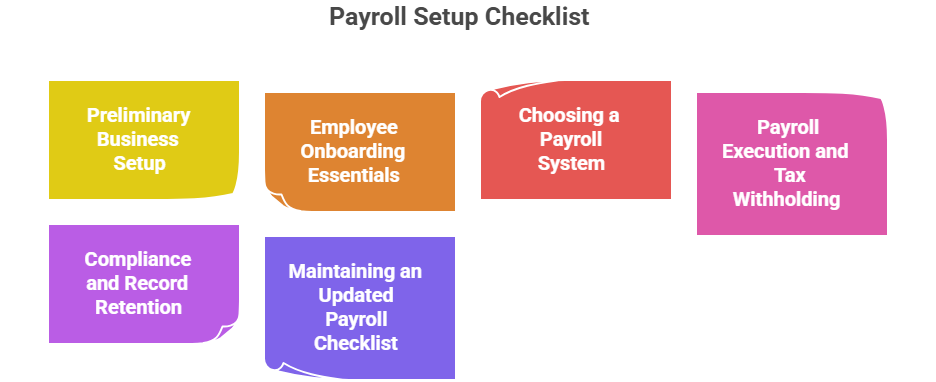
1. Preliminary Business Setup
Before you run your first payroll, it’s essential to get your foundational business setup in place. Key steps include:
- Obtain an EIN (Employer Identification Number)
An EIN from the IRS is required for federal tax reporting.
- Register with State and Local Tax Agencies
In Texas, businesses typically register for state unemployment accounts and other applicable state employer registrations.
- Define Payroll Policies
Determine your pay schedule: weekly, bi-weekly, or monthly, and company policies on bonuses, PTO, and holiday pay.
- Set Up Accounts
Establish a dedicated business bank account for payroll to streamline transactions and reporting.
From our experience helping Houston clients, having this structure in place early often helps avoid confusion when processing payroll for the first time. For businesses interested in professional support with setup, a professional bookkeeping and payroll service may assist in establishing accounts efficiently.
2. Employee Onboarding Essentials
Correctly classifying and onboarding employees is a critical part of the payroll setup checklist. Steps include:
- Classify workers by confirming whether team members are employees or independent contractors, since classification affects tax and reporting obligations.
- Collect required forms by having employees complete applicable federal documents, such as Form W-4 for income tax withholding and Form I-9 for employment eligibility verification.
- Gather necessary information, including bank details for direct deposit, current addresses, and Social Security numbers for accurate payroll processing and recordkeeping.
Proper employee onboarding supports consistent payroll and compliance. For example, we worked with a small Houston service company where multiple employees were being onboarded simultaneously. By implementing our structured onboarding process, we helped them avoid common delays in payroll processing.
3. Selecting a Payroll System
A reliable payroll system can make a big difference in efficiency. Considerations include:
- Choose a payroll system that works with your accounting system, automates calculations, and includes electronic tax filing features.
- Consider offering direct deposit to help reduce administrative errors and streamline payroll distribution.
- Use a system that maintains organized historical payroll records to support organized recordkeeping and reporting requirements.
Using automated payroll software often helps small businesses stay consistent with deadlines and reporting. If you’re evaluating payroll systems, using a financial reporting and analysis service may provide insights into how software choices impact recordkeeping and reporting accuracy.
4. Payroll Execution & Tax Withholding
Once your setup is complete, ongoing payroll management involves:
- Calculate gross pay by determining wages based on hours worked, fixed salaries, or applicable commission structures.
- Withhold required taxes by deducting federal, state, and local income taxes, along with applicable FICA contributions.
- Process deductions by accounting for voluntary contributions such as retirement plans, as well as any legally required garnishments.
- File required tax payments and reports by depositing payroll taxes and submitting applicable quarterly or annual forms, including Forms 941 and 940.
Maintaining consistent payroll processes may become easier when these steps are incorporated into your payroll setup checklist. In our experience, Houston small businesses that adopt a structured payroll routine can reduce the risk of errors during tax reporting.
5. Compliance and Record Retention
Payroll compliance doesn’t end with tax deposits. Your checklist should include:
- Record Retention: Many businesses maintain payroll records for at least three to four years for documentation and reporting purposes, including tax filings, wage records, and I-9 forms.
- Year-End Procedures: Issue W-2s to employees and 1099s to contractors by January 31 to meet federal deadlines.
A Houston-based retail client we worked with found that having these procedures documented in their payroll setup checklist helped streamline year-end reporting and made it easier to reconcile records with their accountant.
6. Maintaining an Updated Payroll Checklist
Payroll regulations and business needs evolve over time. To keep your checklist current:
- Review tax rate updates and new federal or state requirements annually.
- Adjust pay schedules or benefit deductions as your company grows.
- Periodically review your payroll process for accuracy.
In 2023, over 32.5 million U.S. small businesses were managing employee payrolls, and most relied on payroll systems or services to support compliance and tax reporting.
Real-World Client Example: Payroll in Practice
One of our Houston clients, a landscaping company with around 12 employees, shared that managing payroll manually was becoming increasingly challenging. Tracking pay schedules, deductions, and employee forms was time-consuming and sometimes prone to errors.
By reviewing their payroll processes using a structured payroll setup checklist and adopting automated payroll tools, we discussed ways they could organize employee information, track gross-to-net calculations, and keep routine payroll tasks on a consistent schedule.
FAQs
1. Why is a payroll setup checklist important for small businesses?
A checklist helps identify all critical steps, from EIN registration to employee onboarding and tax filing, that are completed accurately, reducing errors and missed deadlines.
2. How often should I update my payroll checklist?
It’s recommended to review your checklist annually or whenever there are changes in payroll regulations, business growth, or employee benefits.
3. Can automated payroll software replace a checklist?
While software streamlines calculations and reporting, a manual checklist helps confirm that all compliance and administrative steps are completed consistently.
4. What forms are required for employee onboarding in Texas?
Employees must complete Form W-4 for federal income tax withholding and Form I-9 for employment eligibility verification. Additional local forms may be required depending on your city or industry.
Wrapping Up
Implementing a clear payroll setup checklist may make a noticeable difference in managing payroll efficiently, staying compliant, and reducing administrative stress for small businesses. From initial setup to year-end reporting, each step plays a role in building an organized and reliable payroll system.
For Houston businesses seeking extra support, our team at Dabney Tax & Accounting Services can assist with structural guidance that may help you keep your payroll operations running smoothly while keeping your records in order.