
If you’re a Dasher in Houston, you may be wondering how to file DoorDash taxes. With thousands of independent contractors on the road delivering meals, understanding your tax responsibilities may feel overwhelming. Between tracking earnings, logging miles, and figuring out deductible expenses, the process may seem daunting.
In this guide, we’ll break down key steps, potential deductions, and tools that may help Dashers manage taxes efficiently, while also sharing insights from one Houston client who navigated this process with professional support.
Understanding Your Status as a DoorDash Driver
DoorDash drivers are considered independent contractors. This distinction is crucial because it determines how earnings are reported and taxed.
If you earn $600 or more, DoorDash typically issues Form 1099-NEC through Stripe Express summarizing payments reported to the IRS, including tips and bonuses. The IRS also receives this information, so reporting consistently is important.
One Houston client, who drives part-time for DoorDash while operating a small service business, found that maintaining organized records of each delivery and associated expenses made tax season far less stressful. Keeping detailed documentation of mileage, equipment costs, and phone usage often supports a smoother tax preparation process.
Key Documents and Deadlines
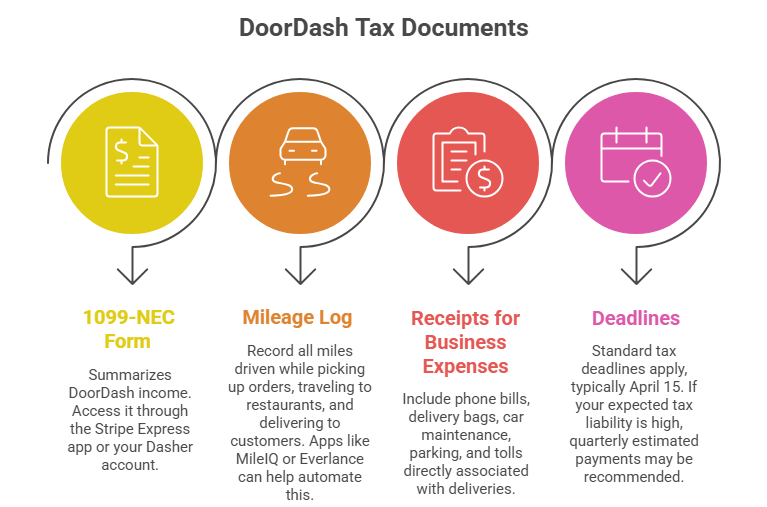
Proper documentation is the foundation of filing. When considering how to file DoorDash taxes, essential items include:
- 1099-NEC Form: Summarizes DoorDash income. Access it through the Stripe Express app or your Dasher account.
- Mileage Log: Record all miles driven while picking up orders, traveling to restaurants, and delivering to customers. Apps like MileIQ or Everlance can help automate this.
- Receipts for Business Expenses: Include phone bills, delivery bags, car maintenance, parking, and tolls directly associated with deliveries.
- Deadlines: Standard tax deadlines apply, typically April 15. If your expected tax liability is high, quarterly estimated payments may be recommended.
With over 70 million Americans freelancing, representing more than a third of the workforce, gig work like DoorDash deliveries is now an economic force
How to File DoorDash Taxes
Here’s a practical approach:
- Gather Earnings Data
Review your 1099-NEC or check the Earnings tab in your DoorDash app for total income. Consistency here is essential for correct reporting.
- Calculate Deductions
- Mileage Deduction: Multiply business miles by the current IRS mileage rate. Eligible business miles related to deliveries may be deductible when properly documented..
- Actual Expenses: Track costs like gas, repairs, insurance, and maintenance if using the actual expense method instead of the standard mileage method.
- Other Deductions: Phone bills, hot bags, and other equipment may qualify as DoorDash driver tax deductions.
- Fill Out Schedule C (Form 1040)
Report income and eligible expenses to determine net profit. Detailed expense records help see that all deductions are accounted for properly.
- Calculate Self-Employment Tax (Schedule SE)
Covers Social Security and Medicare contributions. For Dashers, understanding this calculation helps anticipate obligations.
- Submit Your Tax Return
Many Dashers use software like TurboTax or H&R Block. For those balancing multiple income streams or looking for support, individual tax preparation services in Houston may help manage filings consistently.
Top Deductions for Dashers
Certain deductions are commonly available to DoorDash drivers:
- Mileage
Often, the largest deduction for most Dashers. Logging trips between restaurants, and customer deliveries generally qualify, while commuting miles typically do not.
- Phone/Data Costs
A business-use portion of your monthly phone bill may be deductible based on documented usage.
- Delivery Equipment
Hot bags, phone mounts, or other tools necessary for deliveries.
- Tolls and Parking
Fees incurred while actively completing deliveries, excluding regular commuting.
Tools and Tips for Dashers
- Some Dashers choose to set aside a portion of each payment (often around 25–30%) to prepare for potential tax obligations.
- Use tracking apps such as Stride, Everlance, and MileIQ to automatically log your mileage and expenses, which reduces the need for manual tracking.
- Keep your contact information updated by verifying your DoorDash account has the correct mailing address to receive forms on time.
For Dashers focused on long-term, considering tax planning services in Houston may support estimated payments, income forecasting, and understanding potential deductions.
Discussing a Houston Client’s DoorDash Tax Case
To illustrate how to file DoorDash taxes, let’s look at a recent Houston client case. This client drives part-time for DoorDash while also running a small local service business. Throughout the year, they tracked every delivery, including mileage, parking, tolls, and equipment costs such as phone mounts and delivery bags.
By organizing records consistently, the client was able to reconcile income from both DoorDash and their service business efficiently. When it came time to prepare taxes, having detailed documentation made it easier to complete Schedule C and calculate self-employment tax consistently.
Discussions during the process focused on identifying legitimate deductions, separating personal commuting miles from delivery miles, and verifying that all 1099-NEC income was accounted for.
This case highlights the practical approach Houston Dashers can take: maintaining structured records and reviewing income and expenses periodically may make the filing process less stressful while staying aligned with IRS reporting requirements.
When Professional Help Can Support Dashers
Filing DoorDash taxes can be manageable for some, but complexities increase when multiple income sources, deductions, or quarterly payments are involved. Houston Dashers may find business tax preparation services helpful for consolidating income, applying legitimate deductions, and supporting organized reporting in line with IRS requirements.
Frequently Asked Questions
How to file taxes as a DoorDash driver?
File as a self-employed independent contractor using Schedule C and Schedule SE with Form 1040. Report all income, even if below $600, and track eligible expenses such as mileage, phone bills, and delivery equipment.
Does the IRS know if you do DoorDash?
Yes, DoorDash reports earnings via Stripe to the IRS using Form 1099-NEC for anyone earning $600 or more, so all income must be reported.
Can I deduct my mileage as a Dasher?
Yes, mileage for deliveries, traveling to restaurants, mileage between deliveries is typically eligible, while commuting miles generally are not.
What other expenses can Dashers deduct?
Phone bills, data plans, delivery equipment (hot bags, mounts), and certain tolls or parking fees incurred while completing deliveries may qualify as DoorDash driver tax deductions.
Conclusion
Understanding how to file DoorDash taxes can turn what seems like a confusing process into a manageable routine for Houston Dashers. By tracking mileage, recording expenses, and reporting income properly, Dashers can make tax preparation more manageable.
At Dabney Tax & Accounting Services, we focus on helping Dashers navigate both individual and business tax preparation, as well as planning for upcoming tax seasons. Staying proactive with documentation and reviewing income and expenses regularly often reduces stress and keeps things manageable, letting you focus on other aspects of your work.


