

Knowing what questions to ask a CPA can set a clear direction for your personal finances or business operations before you sit down for your appointment. When you prepare thoughtful discussion points in advance, you can make the conversation more productive while addressing your ongoing reporting obligations.
Individuals and business owners may have questions about how recent tax law changes apply to their circumstances. Preparing those questions in advance can help focus the discussion on relevant tax, accounting, and reporting considerations.
How Should You Address Recent Tax Rule Changes
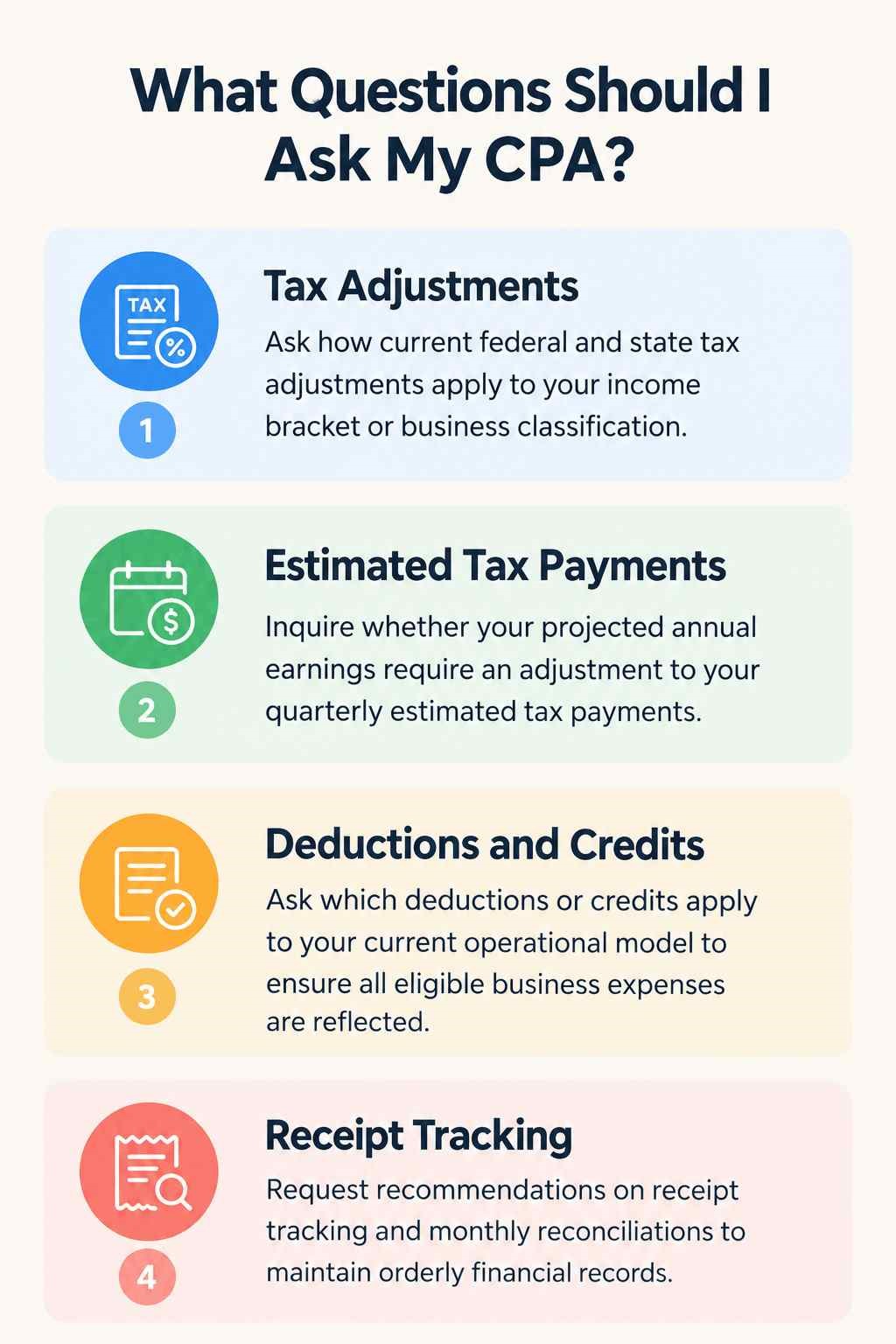
You can begin by asking your accountant how current federal and state tax adjustments apply to your specific income bracket or business classification. Federal regulations and local reporting standards in Texas evolve regularly, which means deductions or thresholds from previous years may no longer apply to your situation.
We find that preparing specific questions to ask a CPA regarding recent legislation helps clarify whether your filing approach requires adjustments. Discussions may include changes to standard deduction amounts, available tax credits, business depreciation rules, and other provisions relevant to the taxpayer’s circumstances. For businesses considering equipment purchases, the CPA can review applicable depreciation rules and placed-in-service requirements.
Evaluating potential adjustments early in the year may help support steady cash flow management. Reviewing your options through structured tax planning in Houston can provide guidance on available choices well before annual filing deadlines arrive.
What Information Relates to Estimated Taxes and Projections
You should ask your CPA whether your projected annual earnings require an adjustment to your quarterly estimated tax payments.
Federal estimated-tax rules generally provide safe-harbor calculations based on 90% of current-year tax or 100% of prior-year tax, with the prior-year percentage increasing to 110% for certain higher-income taxpayers. Eligibility requirements and exceptions apply, and payment timing must also be considered. A CPA can evaluate the applicable safe harbor, withholding, and estimated payments based on the taxpayer’s circumstances.
For example, a self-employed consultant with variable monthly contracts might experience a significant revenue increase during the third quarter. Without reviewing year-to-date earnings against prior-year safe harbor thresholds, that individual might face uncertainty regarding quarterly estimated payment amounts.
Identifying relevant questions to ask a CPA about safe harbor rules and payment adjustments can help you navigate changing income levels throughout the year. Reviewing seasonal revenue shifts, owner compensation adjustments, and projected asset sales early may provide clarity on your overall estimated obligations.
During your discussion, you can review several operational items with your accountant.
- Expected shifts in seasonal business revenue
- Adjustments to owner compensation or draws
- Projected capital gains or losses from asset sales
How Can You Review Deductions and Business Classifications
Asking your accountant which deductions or credits apply to your current operational model helps confirm that your filings reflect all eligible business expenses. From a tax perspective, business owners may discuss how their legal entity structure and federal tax classification affect income reporting, owner compensation, distributions, and available deductions. For example, an LLC may be taxed as a disregarded entity, partnership, S corporation, or C corporation depending on its ownership and applicable elections.
Integrating these inquiries into your tax meeting preparation can highlight areas where recordkeeping might need reinforcement. Preparing targeted questions to ask a CPA about entity classifications and qualified business income deductions can also clarify how federal guidelines apply to your trade.
We recommend compiling documentation for major capital expenses before your consultation, so your accountant can review depreciation methods. A tax preparation or planning meeting can also include reviewing applicable loss carryforwards, depreciation records, and deductions relevant to the taxpayer’s activities, subject to applicable federal tax requirements.
What Steps Support Better Recordkeeping and Compliance
You can ask your CPA for recommendations on receipt tracking and monthly reconciliations to help maintain orderly financial records. Organized documentation is often recommended because it provides clear substantiation in the event of an IRS notice or agency examination.
For business owners, maintaining organized accounting records and performing regular reconciliations can provide financial information used during tax preparation. Individual taxpayers may benefit from maintaining relevant income statements, deduction records, and other supporting documents.
Utilizing consistent bookkeeping services in Houston can support timely reconciliations and may reduce the burden of gathering documents at the end of the year.
Formulating relevant questions to ask a CPA regarding payroll compliance and Texas Workforce Commission reporting can also assist growing businesses. We emphasize establishing consistent digital documentation habits so that financial records remain accessible whenever compliance inquiries arise.
FAQs About Questions to Ask a CPA
When is the best time to schedule a tax review meeting?
Many taxpayers schedule year-end tax planning meetings during the third or fourth quarter, when year-to-date information can be reviewed before the tax year closes. Earlier meetings may be appropriate when significant income changes, business transactions, asset purchases, or other tax-sensitive events are anticipated.
What documents should you bring to your CPA meeting?
You should gather your year-to-date profit and loss statements, balance sheets, and prior-year tax returns. Bringing records of significant asset purchases or changes in business ownership also helps your accountant evaluate your current standing and gives your CPA context for upcoming filing decisions.
How do state rules in Texas impact business tax reviews?
Although Texas does not impose an individual state income tax, certain businesses may have Texas franchise tax reporting obligations, including applicable Public Information Reports or Ownership Information Reports. Employers may also have Texas Workforce Commission unemployment tax and reporting responsibilities. The specific requirements depend on the entity and its operations.
Why should you ask about digital recordkeeping practices?
Digital recordkeeping tools can help maintain organized receipts and transaction logs over required statutory retention periods. Clear records provide appropriate documentation if federal or state authorities issue an official review notice. They make it easier to respond promptly to information requests.
Setting the Stage for Productive Financial Conversations
Bringing well-researched questions to ask a CPA allows you to gain meaningful insights into your financial standing. Whether you operate a business, receive income from multiple sources, or have significant tax-reporting considerations, preparing questions in advance can help make your CPA meeting more focused and productive.
As tax regulations continue to adjust, working with experienced professionals can support your ongoing compliance and documentation needs. You can connect with Dabney Tax & Accounting Services to discuss your general accounting and filing considerations before your next meeting.


