

Establishing a consistent self-employed bookkeeping routine can help independent business owners maintain organized financial records while balancing client work and business development.
Across Houston and Texas, solo practitioners and independent consultants can benefit from establishing bookkeeping procedures early. At Dabney Tax & Accounting Services, we help independent professionals develop structured processes for maintaining their financial records throughout the year.
Building a Solid Financial Base
A dependable system for self-employed bookkeeping begins with establishing separate financial accounts. Combining personal funds with business cash is a frequent challenge for freelancers, but opening a dedicated commercial checking account creates a clean record from the start.
Many self-employed taxpayers use the cash method of accounting, under which income is generally recognized when actually or constructively received and expenses are generally deducted when paid, subject to applicable tax rules. This straightforward approach provides an immediate view of available funds without tracking complex future receivables.
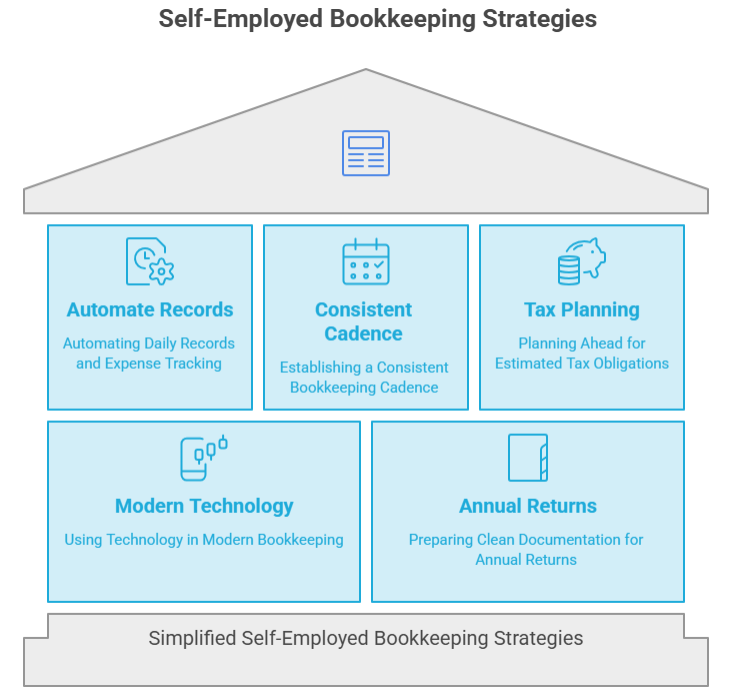
Automating Daily Records and Expense Tracking
Modern cloud tools can significantly streamline self-employed bookkeeping by importing bank feeds and categorizing transactions automatically. Using software to capture and organize digital copies of receipts can reduce reliance on paper records and make supporting documentation easier to maintain.
Logging vehicle travel is another valuable habit for solo operators who visit client offices or job sites across Harris County. Tracking those miles in real time supports legitimate deductions when tax season arrives.
Business owners who prefer dedicated professional support often utilize bookkeeping and payroll services to maintain clean ledgers throughout the year.
Establishing a Consistent Bookkeeping Cadence
Setting aside structured time each week to review bank activity prevents administrative backlogs from building up. A regular weekly check-in can provide an opportunity to match receipts, review client invoices, record out-of-pocket expenses, and address unusual or incomplete transactions while the underlying activity is still recent
Monthly reconciliations can help confirm that recorded transactions agree with bank and credit card activity. Reviewing the resulting financial reports can then provide information about revenue, expenses, cash balances, and other trends relevant to the business.
Establishing these small milestones transforms recordkeeping from an overwhelming chore into a predictable administrative habit that supports long-term operational health. Over time, maintaining this rhythm creates cleaner financial records and gives business owners greater confidence when reviewing performance or planning future expenses.
Planning Ahead for Estimated Tax Obligations
Maintaining consistent self-employed bookkeeping makes estimating quarterly tax payments far more straightforward. Self-employed individuals may owe federal income tax and self-employment tax on net earnings from self-employment and may need to make estimated tax payments during the year.
Some self-employed individuals choose to maintain a separate savings account for anticipated tax payments. The appropriate amount to reserve varies based on factors such as net business income, other household income, deductions, credits, withholding, and the taxpayer’s overall tax situation. Periodic tax projections can help determine an appropriate estimated-payment amount.
For example, a self-employed professional with variable monthly income may benefit from periodically reviewing year-to-date income and expenses rather than assuming each quarter will produce the same tax obligation. Coordinating current bookkeeping information with tax planning can provide a better basis for calculating estimated payments.
Coordinating your numbers with ongoing tax planning provides a proactive way to evaluate deductions before filing deadlines arrive.
The Real Role of Technology in Modern Bookkeeping
Technology offers powerful tools for independent workers, but automated platforms still require human oversight to maintain reliable financial records. Accounting software can automate portions of transaction importing, matching, and categorization, while transactions involving unusual facts, tax treatment, or business purpose may still require additional review and professional judgment.
According to IRS recordkeeping guidance, businesses must maintain records that support reported income, deductions, and other tax return items. Electronic accounting systems must also provide complete and consistent business records.
Businesses using automated accounting tools should still establish procedures for reviewing transactions, reconciling accounts, maintaining supporting documentation, and addressing items that require additional judgment.
Preparing Clean Documentation for Annual Returns
Consistent bookkeeping can provide much of the financial information needed to prepare federal tax forms such as Schedule C, while supporting documentation should also be maintained for reported income and deductible expenses.
Organized books can help a tax professional identify expenses that may warrant further review for potential deductibility, including software subscriptions, professional development costs, and qualifying home office expenses.
Working with a professional for individual tax preparation guidance helps translate your organized records into a complete, well-supported annual filing.
FAQs
Can ChatGPT do my bookkeeping completely?
AI tools can assist with certain bookkeeping-related tasks, but businesses still need processes for verifying transactions, reconciling accounts, maintaining supporting documentation, and addressing accounting and tax issues that require professional judgment.
What is the best AI tool for bookkeeping?
The appropriate accounting platform depends on the business’s transaction volume, reporting needs, integrations, payroll requirements, and other operational considerations. Platforms such as QuickBooks Online and Xero include automation features that can assist with transaction processing and reconciliation workflows.
How often should a self-employed professional update their books?
Setting aside fifteen minutes each week to categorize transactions and log receipts keeps records current. Conducting a monthly reconciliation helps verify that software balances align with actual bank statements and can help identify missing transactions or discrepancies before they become larger issues.
Why is separating personal and business finances so important?
Keeping separate accounts creates a clear financial paper trail, simplifies monthly reconciliations, and helps support business deductions if regulatory questions arise. It also makes it easier to track business income and expenses, prepare tax returns, and understand the company’s actual financial performance.
Practical Habits for Long-Term Stability
Developing consistent self-employed bookkeeping habits can provide independent business owners with more organized financial information throughout the year. Regular transaction review, account reconciliation, documentation, and tax planning can establish a structured process for addressing ongoing financial and filing responsibilities.
If you are ready to bring more structure to your financial records, Dabney Tax & Accounting Services is available to provide guidance tailored to your independent business. Establishing a dependable process today helps you operate with confidence throughout the entire year.


