

Understanding how to process payroll consistently is one of the more foundational responsibilities of running a business, yet it is often the area where small errors compound into significant problems over time. For business owners in Houston and across Texas, building a repeatable payroll process supported by appropriate tools can help businesses organize payroll responsibilities and consistently address applicable compliance requirements.
Payroll is not simply about writing paychecks. It involves classifying employees correctly, tracking hours consistently, calculating deductions, submitting tax filings on time, and maintaining records that hold up under review. Getting each of those elements right consistently is what separates a smooth payroll process from one that quietly creates problems in the background.
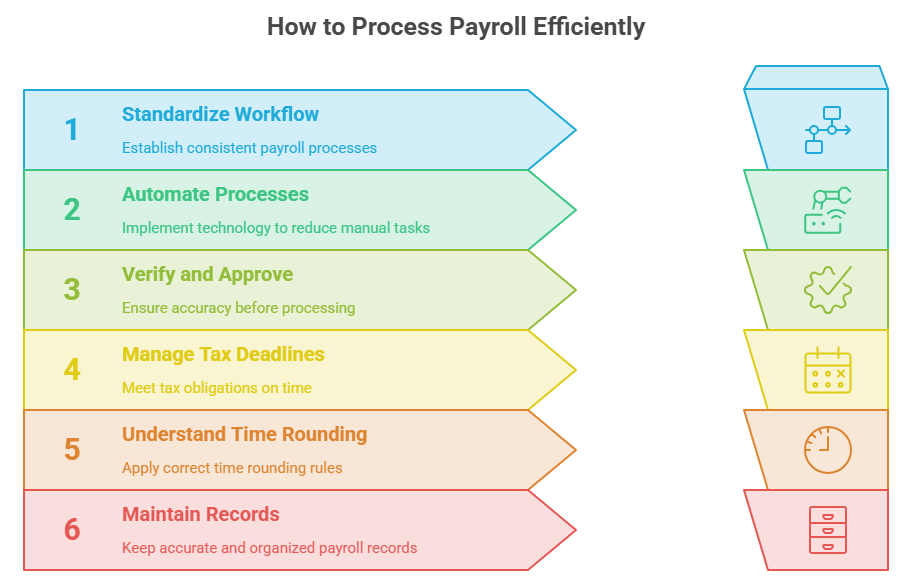
Standardize the Payroll Workflow First
Before automation or payroll software can add real value, you first need to understand how to process payroll through a clear and repeatable workflow. A standardized payroll process reduces guesswork on payday and helps keep each step consistent, from gathering employee hours to calculating pay and completing payroll on schedule.
A few foundational elements worth putting in place include:
- Setting a consistent pay schedule such as weekly, biweekly, or semimonthly and sticking to it.
- Creating a payroll calendar that maps processing deadlines, approval dates, and paydays for the entire year.
- Collecting required employee payroll and tax documentation, including Form W-4, as part of the new-hire and payroll setup process.
- Separating payroll funds from general operating cash to simplify recordkeeping.
Formalizing these basic procedures can create a more structured process for gathering payroll information, reviewing it, and completing payroll consistently from one pay period to the next.
Further, businesses that connect their payroll process to broader tax planning support often find that return deadlines integrate naturally into the overall financial calendar rather than existing as separate obligations to remember.
Use Automation to Reduce Manual Errors
Manual payroll processing can become increasingly time-consuming as a business adds employees and payroll requirements become more complex. Payroll platforms can automate calculations, direct deposits, recordkeeping, and, depending on the service selected, certain payroll tax filings.
A few automation practices that tend to make a meaningful difference include:
- Implementing a trusted payroll platform such as Gusto, ADP, or QuickBooks Payroll to manage calculations and filings.
- Integrating time-tracking software directly with the payroll system so hours flow through automatically.
- Enabling direct deposit as the default payment method rather than issuing paper checks.
- Offering employee self-service so team members can view pay stubs, update tax withholdings, and download W-2s without needing to contact administration.
The time recovered from automating these functions can be redirected toward reviewing the payroll data for consistency rather than manually assembling it in the first place.
Verify and Approve Before Processing
Reviewing payroll data before money leaves the account is one of the more practical ways to prevent costly corrections and compliance issues. When staffing permits, separating payroll preparation and approval can provide an additional internal review before payroll is submitted, smaller businesses can still establish a documented review process in which the owner or authorized individual verifies hours, compensation, deductions, and payroll totals before processing.
Payroll errors identified after processing can require corrected payroll records, adjustments to employee payments, and, in some circumstances, amended payroll tax filings. Reviewing payroll information before submission provides an opportunity to identify discrepancies before processing.
Regular reviews of payroll records are also worth building into the routine. Confirming that employees are correctly classified as exempt or non-exempt, that tax rates are current, and that direct deposit information matches what employees have submitted tends to catch small inconsistencies before they create larger issues.
Manage Tax Deadlines and Filings Consistently
Payroll tax compliance is one of the areas where consistency matters most. Federal, state, and local tax obligations each carry their own deadlines, and missing any of them can result in penalties that add unnecessary cost to the process.
According to the IRS Employer’s Tax Guide, employers are responsible for withholding federal income tax, Medicare taxes, and Social Security from employee wages and depositing those amounts according to the applicable schedule. Failure to deposit on time is one of the more common sources of payroll-related IRS penalties.
Maintaining a filing calendar that tracks all payroll-related deadlines, including quarterly Form 941 filings, annual W-2 issuance, and state-specific requirements, tends to make the compliance side of payroll considerably more manageable.
Understand the 7-Minute Rule and Time Rounding
Federal wage-and-hour rules permit certain time-rounding practices, including rounding employee time to the nearest quarter hour, when the practice is applied in a manner that does not result over time in employees being underpaid for hours actually worked. Under quarter-hour rounding, 1 through 7 minutes may generally round down, while 8 through 14 minutes round up.
Under standard 15-minute increment rounding, a minute value of 52 typically rounds up. For example, a clock-out at 5:52 would round to 6:00 under this rule. The specifics can vary based on how a company structures its rounding intervals, so it is worth confirming that the payroll software and time-tracking system are aligned with the same rounding standard.
Employers using time rounding should apply the policy consistently and ensure that the practice does not systematically disadvantage employees or result in failure to compensate employees properly for time worked.
Maintain Payroll Records Properly
Payroll record-retention periods vary depending on the type of record and the law involved. Federal wage-and-hour rules generally require certain payroll records to be retained for at least three years, while the IRS generally requires employment tax records to be retained for at least four years. Other records may have different retention requirements, so businesses should maintain a record-retention policy appropriate to their circumstances.
Records that should be maintained include pay stubs, tax filings, timesheets, employee classification documentation, and any adjustments made to individual payrolls. Maintaining payroll records securely and in an organized manner can make relevant information easier to retrieve for tax filings, agency inquiries, internal reviews, and other payroll-related needs.
Coordinating payroll records with monthly bookkeeping and payroll services can also help keep wage expense, payroll liabilities, tax payments, and related transactions properly reflected in the accounting records.
Connect Payroll to Broader Financial Reporting
Payroll data is one of the most significant components of a business’s overall financial picture. Consistently recorded payroll information contributes to financial reports by reflecting wage expense, employer payroll taxes, benefits, and related liabilities. This information can also provide useful context for hiring, labor-cost analysis, and year-end tax preparation.
Support through financial reporting and analysis can help translate payroll data into meaningful reports that show labor costs relative to revenue, department-level compensation trends, and other metrics that inform operational decisions throughout the year.
FAQs
What is the 7-minute rule for payroll?
Federal wage-and-hour rules permit certain quarter-hour rounding practices under which 1 through 7 minutes may generally round down and 8 through 14 minutes round up. The rounding practice must be applied in a manner that does not result over time in employees being improperly compensated for hours actually worked.
If a clock-out time is 52 minutes past the hour, does it round up or down in payroll?
Under standard 15-minute increment rounding, a minute value of 52 typically rounds up. A clock-out at 5:52, for example, would round to 6:00. Specific outcomes depend on how the company structures its rounding intervals and quarter-hour rules.
What is the most efficient way to process payroll for a growing business?
The most efficient approach generally involves setting a consistent pay schedule, using automated payroll software that integrates with time tracking, enabling direct deposit, implementing a two-level approval process before submission, and maintaining organized records that support audits and tax filings.
How long should payroll records be kept?
Retention requirements depend on the type of payroll record. Federal wage-and-hour rules generally require certain payroll records to be retained for at least three years, while the IRS generally requires employment tax records to be retained for at least four years. Additional requirements may apply depending on the records involved and applicable federal or state law.
A Consistent Process Makes Payroll Considerably Less Stressful
Learning how to process payroll efficiently comes down to building a repeatable rhythm, using the right tools, and treating compliance as an ongoing responsibility rather than a periodic check. When each of those elements is in place, payroll shifts from being a recurring source of stress to a predictable part of the business calendar.
For Houston-area businesses that want CPA-led support for building or improving their payroll process, Dabney Tax & Accounting Services is available to help. Getting the payroll process right early tends to prevent the compounding errors that make it harder later.


