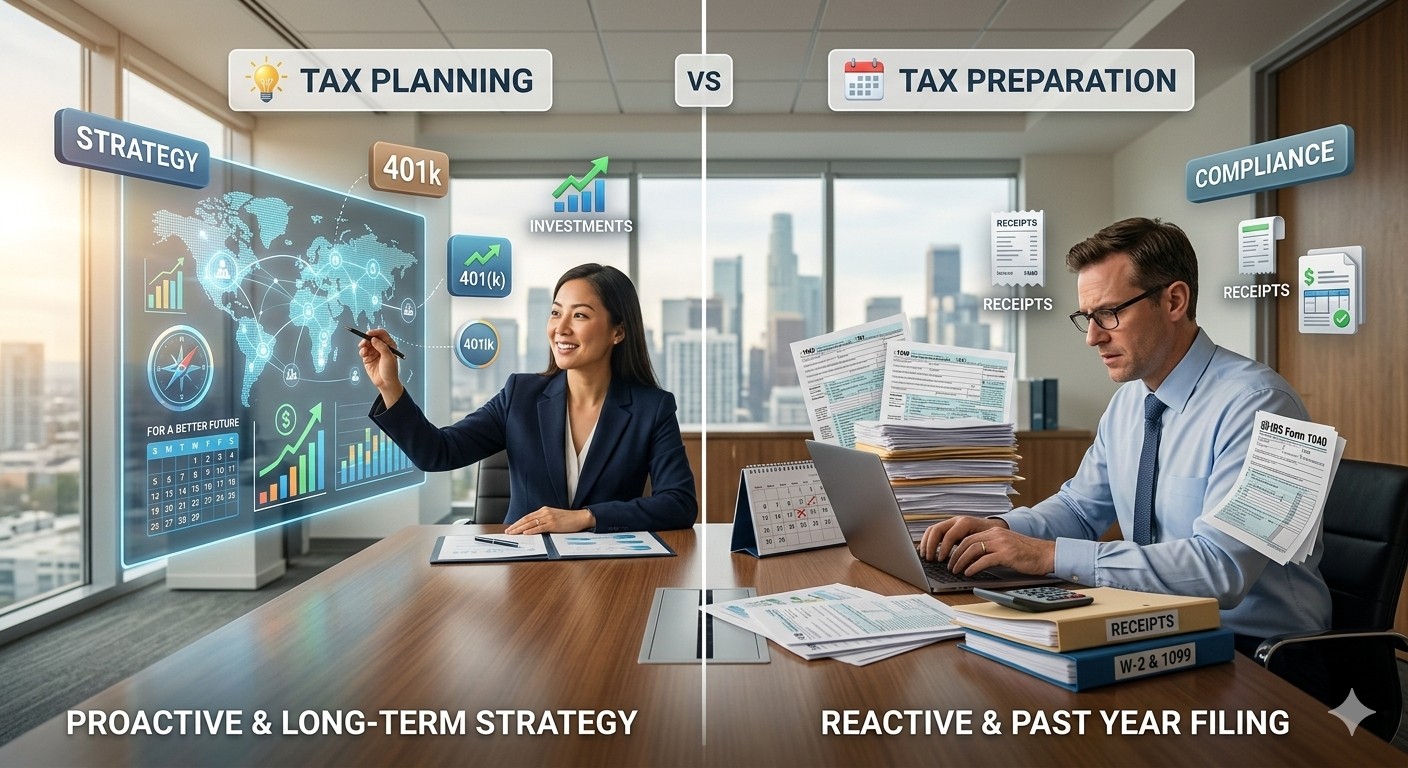
Many Houston businesses and individuals often ask about tax planning vs tax preparation. At first glance, these terms may seem interchangeable, but they actually describe two different approaches to managing tax reporting and financial decisions.
Understanding the distinction may help you make informed decisions throughout the year and prepare for tax season in a more organized way.
Understanding Tax Planning
Tax planning is a proactive, year-round approach that involves reviewing financial activity and considering decisions that may influence future tax outcomes. Unlike tax preparation, which looks backward, tax planning focuses on potential opportunities and strategies that may influence financial decisions from a tax perspective.
For example, a Houston-based small business might review quarterly revenue trends and consider timing certain expenses or retirement contributions to align with potential tax considerations. While this approach does not guarantee specific results, it may help manage future tax obligations.
We often work with clients to develop plans that account for year-round financial changes, seasonal fluctuations in revenue, and local business conditions. This approach may support smoother reporting when the time comes to prepare taxes.
Key Features of Tax Planning
- Timing: Ongoing throughout the year rather than concentrated in a single season.
- Focus: Future-oriented, aiming to anticipate financial and tax considerations.
- Actions: Evaluating income, expenses, retirement contributions, and other financial decisions that may affect taxes.
Tax planning is essentially about taking a forward-looking view of finances to potentially reduce surprises when tax season arrives. With that said, now look at the tax preparation to better understand the comparison of tax planning vs tax preparation.
Tax Preparation
Tax preparation is generally a reactive process that involves documenting past financial activity for filing purposes. It typically occurs during tax season, from January through April, and focuses on compiling income, expenses, and other relevant records.
For Houston freelancers or small business owners, tax preparation may involve collecting W-2s, 1099s, receipts, and other documentation. While preparation itself does not change your tax obligations, it helps ensure that filings are consistent with reported financial activity and IRS expectations.
Clients who maintain organized records throughout the year often find that tax preparation can be more straightforward and less time-consuming. For many, collaborating with professionals for business tax preparation provides guidance on best practices for reporting past financial activity in line with federal and state requirements.
Core Aspects of Tax Preparation
- Timing: Seasonal, typically concentrated around filing deadlines.
- Focus: Past-oriented, reviewing financial activities from the prior year.
- Actions: Gathering documentation, recording past transactions, and preparing filings in line with regulatory guidelines.
Tax preparation allows businesses and individuals to summarize previous financial activity and submit it for official review, without implying specific outcomes or results.
Tax Planning Vs Tax Preparation: Key Differences
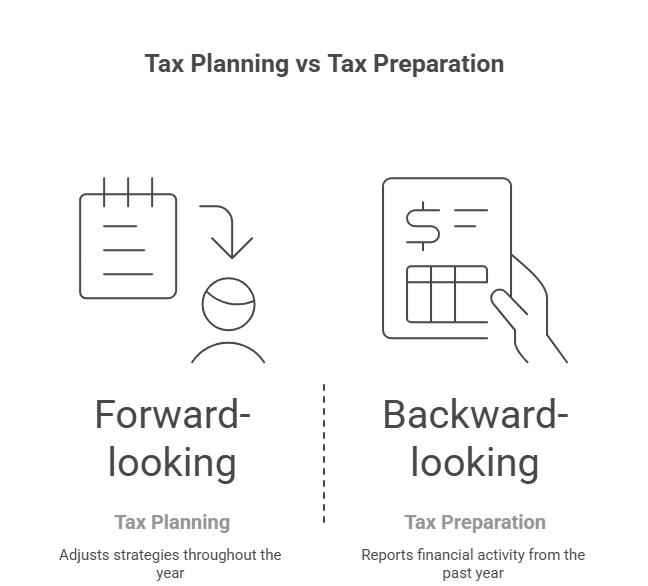
Here’s a comparison to highlight the distinction between tax planning and tax preparation:
| Feature | Tax Planning | Tax Preparation |
| Approach | Adjusts financial strategies throughout the year to potentially affect tax outcomes | Documents and reports on financial activity from the past year |
| Goal | Reviews financial decisions that may influence future tax obligations | Reports prior-year income and expenses in line with regulations |
| Timing | Year-round | Seasonal |
| Focus | Forward-looking | Backward-looking |
| Value | Identifies potential opportunities for deductions or credits | Summarizes and reports existing financial activity |
Understanding these differences can help Houston-based individuals and small businesses balance ongoing planning with the annual preparation process. Further, with nearly 690 million visits to IRS.gov and millions of taxpayer calls and visits annually, it’s clear that people repeatedly seek clarity about tax decisions and options throughout the year.
A Houston Business Perspective
Last year, we worked with one of our Houston-based service clients who experienced a mid-year increase in revenue. During our review, we discussed how their quarterly expenses and employee retirement contributions could potentially influence future tax considerations. Together, we explored options that could influence how future financial activity might be reported from a year-round perspective.
When it came time for their individual tax preparation, the client’s records were well-organized and up to date, which supported a smoother filing process. This example illustrates how ongoing discussions and proactive planning can complement the preparation process, without implying specific results or guaranteed outcomes.
Why Both Approaches Matter
Even with thorough tax planning, tax preparation is still necessary to report financial activity. Planning supports forward-looking decisions, while preparation focuses on documenting prior activity in compliance with federal and state guidelines.
Tips for Integrating Planning and Preparation
- Maintain detailed records throughout the year.
- Review financial decisions periodically to identify potential considerations.
- Collaborate with professionals familiar with the Houston business and tax environments.
Combining proactive planning with consistent preparation can help manage administrative demands and maintain organized financial records.
FAQs
1. What is the difference between tax preparation and tax planning?
Tax preparation focuses on documenting and reporting past financial activity, while tax planning is a year-round strategy that may support managing future tax considerations.
2. What are the 5 D's of tax planning?
The “5 D’s” refer to major life or business events: Death, Disability, Divorce, Disagreement, and Distress that can influence tax planning priorities. Addressing these events promptly may help align estate or business plans with potential tax implications.
3. Can tax planning reduce my tax obligations?
Tax planning involves reviewing financial decisions throughout the year, which may influence how income and deductions are reported. Outcomes are not guaranteed, and results can vary based on individual circumstances.
4. How often should I review my tax strategy?
Many taxpayers benefit from reviewing their financial and tax plans periodically, such as quarterly or semi-annually. Regular reviews can support identifying potential considerations before tax season.
Bringing It Together
In practice, understanding tax planning vs tax preparation isn’t just about knowing the terms; it’s about how these approaches work together throughout the year. Planning helps anticipate potential tax considerations, while preparation documents past activity and aligns it with filing requirements.
By keeping records up to date and reviewing financial activity periodically, you may find the filing process smoother and gain a clearer view of potential tax considerations, all while staying focused on running your business. This kind of approach is what we support at Dabney Tax and Accounting Services, helping clients navigate tax season with more clarity.