

Understanding the tax planner vs CPA role can help individuals and business owners decide which type of professional support may fit their financial situation. Around Houston, from The Woodlands and Sugar Land to Katy and Cypress, many taxpayers juggle a mix of business income, contractor payments, and personal financial obligations.
In situations like these, understanding how different tax professionals operate can help clarify which type of support may fit your situation. In this guide, we’ll walk through how these roles typically work, where they overlap, and when one may be more relevant than the other.
What Does a CPA Do?
A CPA is a licensed accounting professional who meets state education and licensing requirements and passes the Uniform CPA Exam. CPAs often work across a wide range of financial areas, including tax preparation, accounting, reporting, and compliance. From a practical perspective, many individuals and businesses rely on CPAs for tasks such as:
- Preparing annual tax returns
- Reviewing financial records
- Preparing or reviewing financial statements depending on the engagement
- Supporting accounting and reporting requirements
For example, services like business tax preparation often involve gathering financial data, preparing required filings, and reviewing records to support compliance with tax regulations. And because CPAs are trained in broader accounting principles, their role often extends beyond tax season into ongoing financial reporting.
What Does a Tax Planner Do?
A tax planner focuses primarily on analyzing tax rules and exploring ways individuals or businesses may structure financial decisions throughout the year. In general terms, tax planning may involve reviewing topics such as:
- Timing of income and expenses
- Retirement contribution considerations
- Business deduction categories
- Estimated tax obligations
When people compare a tax planner vs CPA role, the distinction often centers on timing. However, the lines can overlap. Some CPAs also offer planning services, particularly when they work with clients year-round. This is fairly common for business owners in growing Houston suburbs like Pearland, Spring, and Tomball.
Key Differences: Tax Planner vs. CPA
Focus of Work
One of the main distinctions in tax planner vs CPA discussions involves focus.
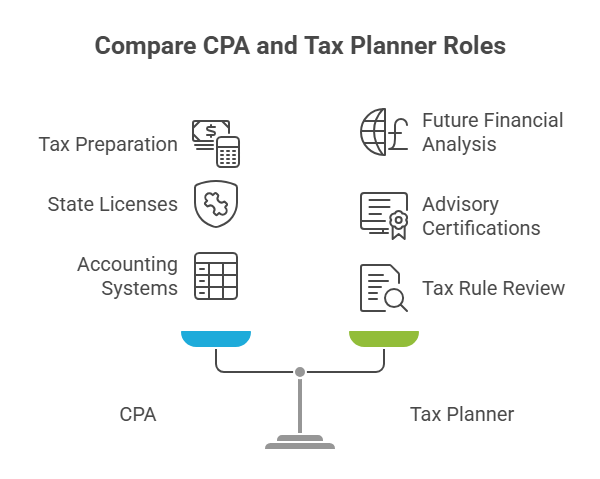
- CPAs often handle tax preparation, reporting, and accounting documentation.
- Tax planners typically analyze future financial scenarios and tax implications.
Credentials and Licensing
CPAs hold state licenses and must meet education, examination, and continuing education requirements. Tax planners may hold credentials such as Certified Financial Planner (CFP®) or other advisory designations, though qualifications vary widely depending on the professional.
Moreover, because CPAs are licensed accountants, they may also represent clients in certain IRS-related matters.
Scope of Financial Work
When people explore a tax planner vs CPA, they also notice differences in scope. A CPA may handle:
- Accounting systems
- Financial statements
- Business reporting
- Tax return preparation
A tax planner usually concentrates on reviewing tax rules and discussing how financial decisions may interact with tax regulations over time.
When a CPA May Be the Right Fit
Many individuals and businesses choose to work with a CPA when they need assistance with preparing and filing taxes, organizing financial records, or managing accounting responsibilities.
In these situations, tax planner vs CPA comparisons often highlight the practical role a CPA can play in handling financial documentation.
CPAs frequently assist with:
- Individual tax returns
- Business tax filings
- Financial reporting and recordkeeping
Services such as individual tax preparation typically involve gathering financial records, reviewing income sources, and preparing required filings in accordance with current tax guidelines.
When Tax Planning May Be Useful
Tax planning typically comes into focus when individuals or business owners want to review potential tax implications before the end of the year. This might involve conversations about projected income levels, anticipated deductions, or the timing of certain financial decisions.
For instance, businesses sometimes review potential tax considerations related to equipment purchases, payroll changes, or year-end expenses. These discussions are commonly part of broader tax planning services.
From a tax perspective, planning conversations may help businesses stay aware of how financial decisions could interact with current tax rules. This is particularly relevant for business owners operating in Houston’s Energy Corridor or industrial areas near Pasadena and Baytown, where operational expenses and project-based income may fluctuate throughout the year.
A Realistic Example from Houston
One of our clients is an HVAC contractor based in Katy, Texas, serving residential clients across West Houston and Cypress. Like many service-based businesses in the region, the company manages invoices, payroll, and equipment purchases throughout the year.
During tax season, the contractor typically works with our team to organize financial records and prepare business tax filings.
Later in the year, the contractor begins thinking about replacing service vehicles and adding another technician. At that point, a planning discussion may take place to review how certain financial decisions could interact with tax reporting requirements.
Situations like this often illustrate the practical conversation around tax planner vs CPA; both professionals may contribute to different parts of the financial process.
Do You Need Both?
From a practical standpoint, the most helpful approach often depends on factors such as:
- The complexity of financial records
- Business income structure
- Timing of financial decisions
For many business owners in Houston’s service economy, or in industries like oil and gas accounting, having ongoing accounting support alongside tax planning conversations can be useful when managing year-round financial activity. In fact, research suggests that more than half of taxpayers use a paid professional to prepare their tax return.
FAQs
Can a CPA help with tax planning?
Yes, many CPAs discuss tax planning topics with clients throughout the year. These conversations may include reviewing financial records, discussing projected income levels, and considering how certain financial decisions may interact with tax regulations.
What is the main difference between a tax planner and a CPA?
The primary difference often relates to focus. CPAs frequently handle accounting, reporting, and tax return preparation, while tax planners typically review potential future tax implications connected to financial decisions.
Is a tax planner more expensive than a CPA?
No, costs vary widely depending on the services involved, the complexity of financial records, and the professional’s experience. Some professionals charge hourly, while others offer bundled service packages.
Do small businesses need tax planning services?
In many cases, small business owners review tax considerations throughout the year, especially when income, expenses, or hiring plans change. Planning discussions may help them understand how financial decisions interact with tax reporting requirements.
Bottom Line
The conversation around tax planner vs CPA often comes down to timing and scope. CPAs commonly focus on financial reporting, accounting records, and tax preparation, while tax planners typically review potential tax considerations tied to future decisions.
For many individuals and businesses, these roles complement each other rather than compete. At Dabney Tax & Accounting Services, our team works with Houston-area individuals and businesses. Whether it’s reviewing financial records for filing season or discussing upcoming tax considerations, these services may help support a clearer understanding of how tax reporting and planning fit into your overall financial picture.


