If you have employer-sponsored health coverage, you may have asked yourself, “What is a 1095-C?”, and why does it show up around tax season. We hear this question often from employees and business owners alike, especially in Houston, where many people work for large employers in energy, healthcare, and service industries.
While it is connected to taxes, it generally does not need to be attached to your return. Instead, it serves as an informational record that can support accurate reporting. Let’s break it down in plain language and look at when it matters, when it doesn’t, and how it fits into your overall tax picture.
Understanding the Basics of Form 1095-C
At a high level, Form 1095-C is connected to the Affordable Care Act. Employers classified as Applicable Large Employers (ALEs) generally send this form to full-time employees who averaged around 30 hours per week or more.
Further, data from federal health surveys indicate that around 86% of private‑sector employees in the U.S. worked for companies offering health insurance, underscoring why instruments like Form 1095‑C are so widely issued to workers at larger firms.
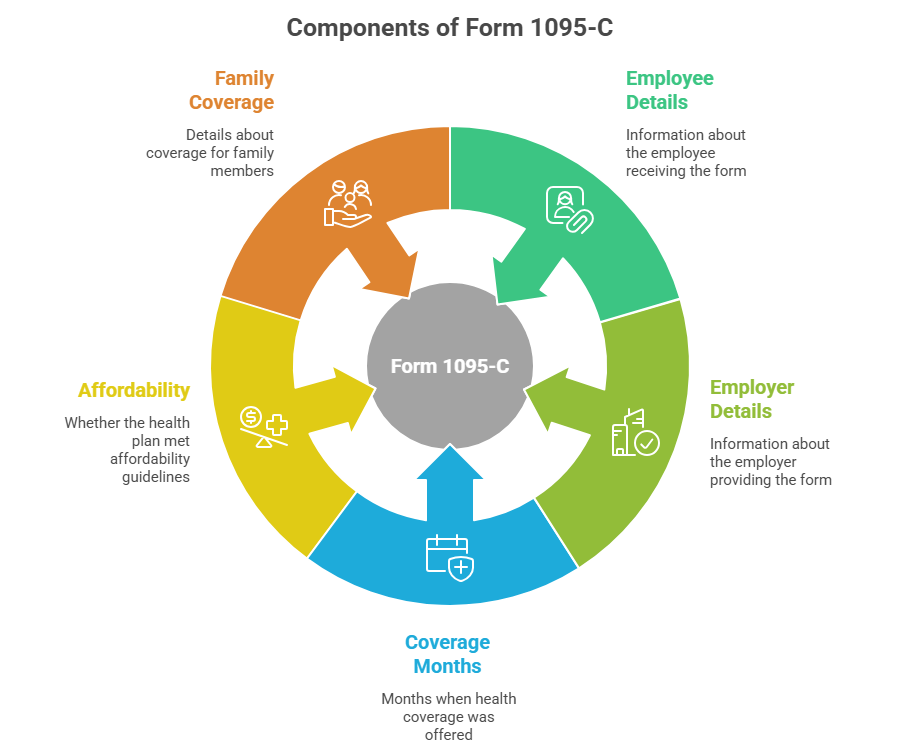
When people ask about Form 1095-C, they are usually wondering whether it changes their taxes. In most cases, it simply confirms that an employer offered health insurance coverage during the year. It includes information such as:
- Employee and employer details
- Months when coverage was offered
- Whether the plan met affordability guidelines
- Family coverage details (if applicable)
You might receive more than one form if you worked for multiple large employers during the same year. This is fairly common in industries like construction, oil & gas support services, or healthcare staffing across Texas.
What Information Is Included on the Form
People often feel overwhelmed when they first open the form, but it helps to think of it in three simple sections:
Part I covers identification details for both the employer and the employee.
Part II explains the offer of coverage and its affordability.
Part III appears when the employer offers a self-insured plan and lists covered individuals.
If you already keep organized tax documents or work with professionals for business tax preparation, this form usually fits into the same folder as other year-end records rather than becoming a major filing requirement.
Do You Need Form 1095-C to File Taxes?
This is the biggest question we hear, and the simple answer is usually no. You generally do not need to submit the form with your federal return.
So when someone asks, what is a 1095-C in relation to filing, we explain it as a reference document. It helps verify that health insurance was offered and may support information you report on your return if questions come up later.
If you already filed your return and then receive the form, it does not automatically mean you need to amend anything. Many taxpayers worry unnecessarily about this, but often the form simply confirms what was already known.
A Quick Houston Example
We recently assisted a Houston client who works for a large engineering firm and received a 1095-C after filing her taxes. She had already completed her return using her W-2 and other payroll records and was concerned she might need to amend it.
When we reviewed the form together, it simply confirmed that her employer had offered health coverage all year. Since the information matched her records, no changes were needed. She kept the form with her tax paperwork for reference, just in case any questions came up later.
Scenarios like this are common among Houston employees in industries such as oil and gas and local service businesses, where employment dates and benefits can vary throughout the year.
Why Good Recordkeeping Still Matters
Many small business owners and independent professionals in Houston find that clean financial records help them understand how personal health coverage documentation fits alongside income records.
This is where broader financial visibility helps. Organized financial reporting may help make year-end reviews easier when multiple tax documents arrive.
Common Misunderstandings About Form 1095-C
There are a few myths we hear repeatedly:
- It does not automatically increase or reduce your refund
- It is not the same as a marketplace insurance form
- Receiving it does not mean you did something wrong
When people search for “What is a 1095-C?”, they often expect complicated tax implications. In reality, it is usually a record that confirms insurance availability.
Looking at the Bigger Picture in Tax Planning
For many Houston professionals, planning ahead may help reduce last-minute uncertainty when multiple documents show up at once. Discussion with a tax planning service often includes reviewing income sources, benefits, and reporting documents so that tax filing feels more manageable.
FAQs
1. Do I need to submit a 1095-C with my tax return?
In most cases, no. The form is generally for your records and is not attached to a federal return. It may help confirm your health coverage details if needed later.
2. Does Form 1095-C impact my tax refund?
In most cases, no. It is an informational document. However, it may provide context for health coverage reporting or insurance-related credits.
3. What if I get multiple 1095-C forms?
This can happen if you worked for more than one large employer during the year. Keep all copies with your records to maintain complete documentation.
4. What should I do if I receive the form after filing my taxes?
Many people often receive it after filing. In many situations, no action is required, but keeping it with your records may help if questions arise in the future.
To Conclude
Understanding “what is a 1095-C” may help manage tax season with fewer difficulties. For most people, it’s simply a record showing that health coverage was offered through an employer, not a form that changes how you file. Keeping it organized with your other tax documents can support smoother recordkeeping and clearer year-end reviews.
If you’re sorting through multiple forms, balancing business finances, or just trying to make tax season feel less overwhelming in Houston, having reliable guidance can make the process feel more manageable. Learn more about how the team at Dabney Tax & Accounting Services supports businesses and individuals with clear, guidance-focused tax and financial services.