
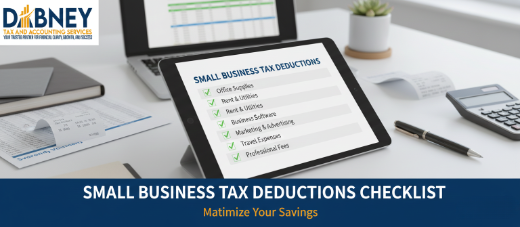
Managing business finances often means making sense of expense types throughout the year, which is why a small business tax deductions checklist can be useful. Rather than focusing on outcomes, many Texas business owners use a checklist as a reference tool that may help frame how everyday costs are commonly grouped for tax reporting purposes.
In our work with Houston-area service providers, contractors, and professional firms, we often see that a checklist supports clearer conversations around categorization, timing, and documentation, especially when books are reviewed consistently rather than all at once.
Small Business Tax Deductions Checklist

Below is a practical tax deductions checklist that outlines expense categories commonly reviewed during tax preparation.
- Core Operating Expenses
- Employee and Service-Related Costs
- Asset, Equipment, and Vehicle Expenses
- Travel and Operational Mobility
- Other Commonly Reviewed Categories
Core Operating Expenses
Office Space, Utilities, and Supplies
Office-related costs often form the foundation of a checklist. These may include:
- Rent for office or workspace
- Internet, phone, and electricity that are tied to business use
- Office supplies, computers, and software
In many cases, working with a provider offering bookkeeping and payroll services may assist with maintaining consistency throughout the year.
Marketing and Advertising
Marketing costs such as website hosting, digital ads, branding materials, and promotions are another common category on a small business tax deductions checklist. These expenses often appear across multiple platforms, which makes periodic review helpful.
Banking Fees and Interest
Business checking account fees, credit card processing charges, and certain interest expenses related to business activity are often included. These items are usually visible in bank statements.
Employee and Professional Service Expenses
Payroll and Benefits
For businesses with employees, payroll-related expenses can be significant. This category may include wages, employer-paid payroll taxes, and benefits.
Professional and Outside Services
Fees paid to accountants, bookkeepers, consultants, or attorneys for business-related work are commonly grouped here. Many business owners find that reviewing these expenses alongside other operating costs may offer helpful context.
In practice, working with a qualified tax professional may assist in reviewing how these costs are reflected in year-end reports.
Contract Labor
Payments to independent contractors are another frequent checklist item, especially for Texas service businesses that rely on flexible staffing. Clear labeling and documentation may make this category easier to review.
Assets, Equipment, and Vehicle Use
Business Vehicles
Vehicle-related costs such as fuel, maintenance, insurance, or mileage are commonly reviewed when business use is involved. Some owners track mileage, while others may look at actual expenses. From a documentation standpoint, consistency matters more than the specific method used.
Equipment and Depreciation
Larger purchases like machinery, tools, or office furniture are often handled differently from everyday supplies. These items may be reviewed over multiple years rather than expensed all at once, depending on how they are treated for tax purposes.
Repairs and Maintenance
Routine repairs that keep assets operational are often separated from upgrades or improvements. Clear descriptions in accounting records may make later reviews more straightforward.
Travel, Meals, and Operational Mobility
Business travel costs such as airfare, lodging, and local transportation are commonly part of a small business tax deductions checklist. These expenses are often tied to specific trips or projects, which makes documentation important. Further, business meals may also appear in this category.
Other Categories Commonly Included
Home Office Use
When a portion of a home is used regularly and exclusively for business, it may be reviewed as a home office expense. Because this category can vary widely by situation, many owners revisit it annually.
Insurance, Licenses, and Education
Business insurance premiums, license fees, and work-related education costs are often included in checklist reviews. These items tend to be predictable year over year, which can help with consistency.
Retirement and Long-Term Considerations
Owner retirement contributions are sometimes reviewed as part of broader financial reporting. These conversations often come up during general tax planning discussions, where the focus stays on understanding how different expense categories interact over time.
Startup Costs and Receivables
Newer businesses may review startup-related expenses, while established companies sometimes review unpaid invoices. These items round out a more complete small business tax deductions checklist.
A Client Experience We See Often
In one recent engagement, a local contractor came to us with generally solid records but inconsistent expense grouping across accounts. Vehicle-related costs were logged in multiple places, and professional fees were mixed in with general operating expenses.
We reviewed his books and assisted him in framing expenses around categories rather than individual transactions. That approach made it easier to align bookkeeping records with year-end tax preparation needs.
This is one example, but you need to know that small businesses are a major part of the U.S. economy. There are nearly 34.8 million small businesses nationwide, collectively employing about 59 million Americans, which is nearly 46 percent of private‑sector workers.
FAQs
Frequently Asked Questions
What is the most overlooked tax break?
Smaller items like out-of-pocket charitable contributions, education-related costs, or state taxes paid in a prior year are sometimes overlooked because they don’t stand out in daily operations.
What is the $75 rule?
According to IRS guidance, receipts are generally not required for individual business expenses under $75, except for lodging and certain other situations.
What are common tax mistakes to avoid?
Common issues include inaccurate data entry, math errors, incorrect filing status, or missing identification details.
Is a checklist a useful tool for organizing business expenses?
Yes, a checklist can be a helpful reference, but it’s typically most effective when used alongside consistent bookkeeping and periodic professional review.
Closing Thoughts
A small business tax deductions checklist is about visibility. When expense categories are reviewed regularly and documented clearly, tax preparation conversations may feel more manageable.
If you want assistance from a professional to review your records, categorize expenses, or support year-round bookkeeping, our team at Dabney Tax & Accounting Services can provide guidance that may assist in keeping your business expenses organized and better prepared for tax season.


