

A layoff or job transition can create financial uncertainty, and receiving a severance package often leads to one immediate question: how is severance pay taxed? Understanding how the IRS treats severance helps both employees and employers better understand withholding and year-end reporting implications.
In our Houston CPA practice, we assist businesses and individuals with severance-related payroll and tax questions. From the employer perspective, the goal is to follow federal payroll withholding rules and maintain organized records. From the employee perspective, the goal is understanding how severance affects total taxable income for the year. Because Texas does not impose a state income tax, the focus is on federal tax rules, withholding requirements, and payroll compliance.
How Is Severance Pay Taxed Under Federal Rules?
Under IRS Publication 15, severance payments are treated as taxable wages. This generally means they are subject to:
- Federal income tax withholding
- Social Security tax (6.2%)
- Medicare tax (1.45%)
Severance is often classified as a supplemental wage, similar to bonuses, commissions, or back pay. When severance is treated as supplemental pay, employers may be permitted to use IRS-authorized methods to calculate withholding, rather than relying strictly on regular payroll tables.
How Is Severance Pay Taxed if It Increases Annual Income?
A common concern is whether severance pay pushes a taxpayer into a higher income bracket. Because severance is usually paid in a single large amount, it can increase taxable income for the year and affect withholding at the time of payment.
However, withholding is only an estimate. Your actual tax liability for the year is based on your total income, deductions, and credits when you file your tax return.
For example, if an employee receives six months of severance in a single payment, withholding may appear high due to supplemental wage rules. But the final tax calculation at year-end will still use actual annual numbers, not the single severance payment alone.
Texas-Specific Considerations for Severance Pay Tax
Texas employees benefit from the absence of state income tax. However, employers still should:
- Follow federal payroll withholding rules
- Maintain organized categorization of severance
- Remit federal payroll taxes on time
- Maintain clean payroll records for IRS and TWC compliance
While Texas employers do not withhold state income tax, they are still responsible for unemployment tax requirements administered by the Texas Workforce Commission (TWC).
Lump Sum vs. Periodic Payments: How Severance Pay Is Taxed
The method of payment can affect how severance is withheld.
When clients ask how is severance pay taxed, we explain that the IRS recognizes two primary methods:
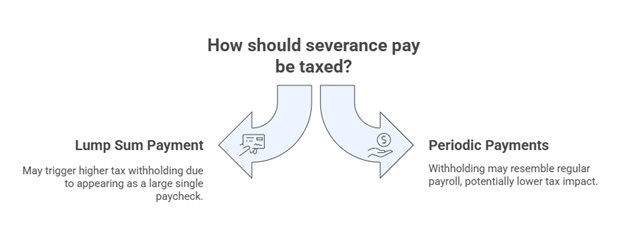
- Lump sum payment – A single large payment of severance. For withholding, this may trigger higher tax withholding, because it looks like a large single paycheck.
- Periodic payments – Severance paid over time, like regular paycheck installments. Withholding may resemble regular payroll withholding.
When severance is characterized as a supplemental wage, the IRS may allow a flat 22% withholding rate for supplemental wages under current rules for federal income tax if under $1 million. If above that threshold, a 37% rate may apply.
Withholding on a $20,000 Severance Payment
| Tax Type | Rate | Approx. Withholding |
| Federal Income Tax | 22% | ~$4,400 |
| Social Security Tax | 6.2% | ~$1,240 |
| Medicare Tax | 1.45% | ~$290 |
| Estimated Total Withheld | — | ~$5,930 |
This is for illustration only. Actual withholding depends on the employer’s payroll process and the employee’s W-4.
How Is Severance Pay Taxed From the Employer’s Perspective?
Under IRS rules, severance is generally treated as taxable wages. This typically includes:
- Withholding federal income tax
- Withholding and remitting FICA taxes
- Applying FUTA where applicable
- Handling SUTA obligations for Texas payroll accounts
- Reporting severance realistically in payroll records
Texas employers do not withhold state income tax, but federal compliance still applies. Because improper payroll classification may create compliance issues, many companies seek a CPA review before processing severance payroll.
Strategies Employees Should Consider for Tax Planning
When employees ask how is severance pay taxed, we encourage them to consider the following:
- Confirm payment structure
(Lump sum vs. periodic installments may change withholding outcomes) - Review whether estimated tax adjustments may be needed for the year
- Update Form W-4 if necessary
- Ask how the timing of severance might affect withholding for the year
- Monitor how severance affects credits, deductions, and AGI
These are general considerations only. A qualified tax professional may provide guidance on this by looking at your specific situation.
When to See a CPA for Severance-Related Tax Questions
Either you are receiving severance or designing severance packages for employees, a CPA can help you:
- Review withholding methods
- Confirm proper classification as wages
- Understand federal tax treatment
- Evaluate timing considerations
- Reduce the risk of payroll errors
At Dabney Tax & Accounting Services, we help Texas businesses and workers review the tax implications of severance. While we don’t guarantee outcomes, we provide guidance aligned with federal rules and Texas payroll standards.
If you are trying to tackle severance pay and need clarity, reach out to our CPA-led team to review how your severance pay may be taxed and what steps to consider next.
Frequently Asked Questions
1. What is the tax rate on severance pay in Texas?
Texas does not have state income tax. However, severance is taxed at the federal level and is subject to income tax withholding and FICA taxes.
2. Is severance taxed at a higher rate?
It can appear that way if paid as a lump sum because supplemental wage withholding rules may apply. Final tax liability is determined when filing your return.
3. Does Texas require severance pay?
No. Severance is not required by Texas law and generally depends on employer policy or contract terms.
4. Can I avoid paying a high tax rate on severance?
There is no way to eliminate tax on severance, as federal rules require that severance be treated as taxable wages. However, reviewing withholding choices with a tax professional may help you understand how severance fits into your overall tax picture.
5. Is it better to take severance in a lump sum or installments?
It depends on your tax situation. Lump sums may trigger higher withholding, while periodic payments may spread the impact. A Houston CPA can help evaluate the workable options for your specific situation.


