Small business accounting best practices aren’t just about staying organized; they may help business owners better understand their financial information, have smoother tax preparation, and long-term stability.
When businesses follow consistent accounting practices, they often develop a clearer financial picture over time that’s easier to manage over time. Let’s walk through what actually matters, without overcomplicating things.
Why Accounting Practices Matter More Than Most Owners Expect
In many Houston-based businesses we’ve seen, accounting often starts as an afterthought, something handled when tax season rolls around. But over time, that approach may create gaps.
From a practical standpoint, consistent financial tracking may help reduce the likelihood of errors, support compliance, and provide better visibility into how the business is performing. Implementing small business accounting best practices is less about perfection and more about consistency.
Separate Business and Personal Finances Early
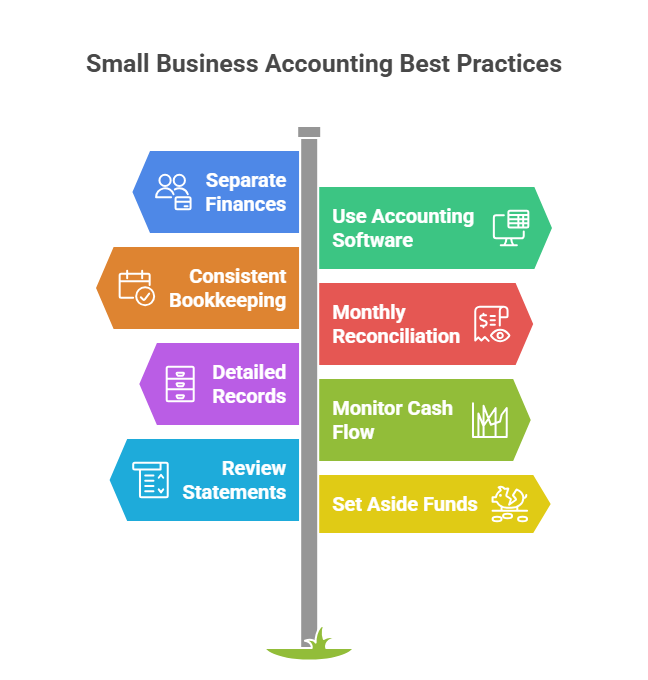
One of the most widely discussed fundamentals is keeping finances separate. Using a separate business bank account and credit card may make it easier to:
- Track expenses clearly
- Avoid confusion during tax preparation
- Maintain cleaner financial records
Many small business owners in Texas, especially in service industries, start off mixing accounts. It works at first, but untangling those transactions later can become time-consuming. From an accounting perspective, separation may help simplify reporting and reduce unnecessary complications.
Use Reliable Accounting Software
Modern tools have changed the way small businesses handle finances. Today, many business owners are leaning toward automation. In fact, many small businesses now use accounting software or digital tools to help manage financial records.
Using software doesn’t eliminate the need for oversight, but it may make day-to-day processes more manageable. In many cases, businesses that adopt digital systems earlier find it easier to:
- Maintain accurate records
- Generate financial reports when needed
- Stay consistent with bookkeeping
This aligns closely with small business accounting best practices, especially as operations grow.
Stay Consistent With Bookkeeping
Recording transactions regularly, whether daily or weekly, may help prevent backlogs and the risk of missed entries. It also keeps your financial data up to date, which can be useful when reviewing performance or preparing reports.
Some business owners choose to handle this internally, while others explore support like bookkeeping and payroll services when their workload increases.
Reconcile Accounts Monthly
Reconciling accounts simply means comparing your internal records with bank and credit card statements. It might sound technical, but it’s essentially a routine check to confirm everything matches. Doing this monthly may help:
- Identify duplicate or missing transactions
- Catch errors early
- Help maintain accurate financial records
Regular reconciliation is one of those small business accounting best practices that may quietly prevent bigger issues later.
Keep Detailed Financial Records
Maintaining records such as receipts, invoices, and expense logs can support:
- Accurate bookkeeping
- Tax preparation
- Financial transparency
Digital storage has made this much easier. Scanning receipts or using software to attach documents to transactions can save time and reduce paper clutter.
Monitor Cash Flow
A business can appear profitable and still struggle to cover expenses if cash isn’t flowing consistently. That’s why tracking inflows and outflows regularly is often emphasized. It may help business owners:
- Plan for upcoming expenses
- Reduce the risk of short-term cash shortages
- Understand seasonal trends
For service-based businesses in Houston, where revenue can fluctuate, this may become especially relevant.
Review Financial Statements Periodically
Reviewing financial statements periodically may help identify patterns, highlight areas of concern, and provide clarity on overall performance. Some businesses also explore support like financial reporting analysis when they want a more structured view of their financial data.
This step ties directly into small business accounting best practices, especially for businesses aiming to grow sustainably.
Set Aside Funds for Taxes
Taxes often catch business owners off guard. Not because they’re unexpected, but because they aren’t planned for. Setting aside a specific portion of income throughout the year may help reduce pressure during filing periods. It may also make the process feel more manageable.
From a tax preparation standpoint, maintaining organized records and consistent tracking may support more accurate filings. Some businesses look into services like business tax preparation when they want help organizing this process.
A Common Situation for Small Businesses in Houston
We’ve come across situations where a small home services business in Houston managed everything manually for the first couple of years. Receipts were stored in folders, transactions were recorded occasionally, and reconciliations were skipped. As the business grew, those gaps started to show, especially during tax season.
Once they began applying small business accounting best practices, like using software, reconciling monthly, and tracking cash flow, their records became more organized. While it didn’t change overnight, it created a more manageable system over time.
FAQs
1. What are small business accounting best practices?
They generally refer to consistent financial habits like tracking transactions, reconciling accounts, separating finances, and reviewing reports regularly. These practices may help maintain organized and accurate records.
2. How often should bookkeeping be done?
In many cases, bookkeeping is handled weekly or monthly. The key is consistency, as regular updates may help prevent errors and backlogs.
3. Do small businesses need accounting software?
While not mandatory, many businesses find that software tools simplify tracking, reporting, and organization. They can support efficiency, especially as operations grow.
4. Why is cash flow tracking important?
Cash flow tracking helps monitor how money moves in and out of the business. It may provide insight into financial stability and help plan for upcoming expenses.
Bringing It All Together
When you look at it closely, most small business accounting best practices come down to consistency, organization, and clarity. They aren’t complicated, but they do require attention. That’s where many businesses struggle. Not because they don’t understand what to do, but because staying consistent while running day-to-day operations can be challenging.
That’s why having the right support may make a difference. If you’re navigating these challenges and want a more structured approach, you can explore our services at Dabney Tax & Accounting Services. Sometimes, having experienced professionals involved may help bring more clarity to your financial processes without adding unnecessary complexity.