
For many entrepreneurs in Houston, managing finances may feel overwhelming, which is why many business owners explore small business tax planning early in the lifecycle of their business. By implementing thoughtful strategies, you may better understand cash flow, leverage deductions, and keep your business financially healthy.
Understanding the nuances of tax planning may allow you to see opportunities that might otherwise slip by, from accelerating expenses to maximizing retirement contributions. Let’s explore practical approaches and real-world examples that may help you to keep your business on track.
Why Small Business Tax Planning Matters
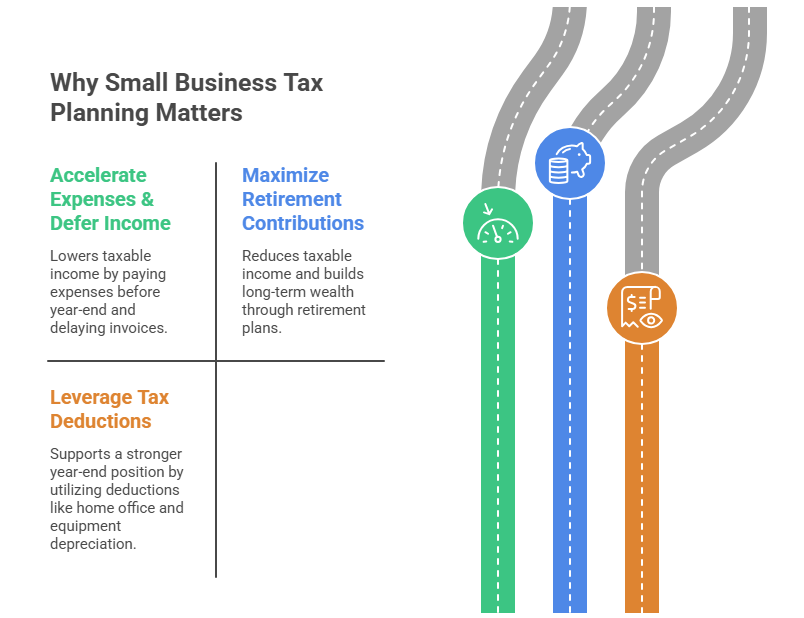
Effective tax planning is about creating an organized cash flow and supporting long-term growth. For Houston-based small businesses, this often involves a mix of proactive planning:
- Accelerating Expenses & Deferring Income: If your business operates on a cash basis, paying for expenses before year-end or timing certain invoices differently may influence how income is reported in a given tax year.
- Improving Retirement Contributions: Contributing to retirement plans such as SEP-IRAs or 401(k)s may affect taxable income depending on eligibility and contribution limits.
- Leveraging Tax Deductions: From home offices and vehicle expenses to equipment depreciation, understanding potential tax deductions is vital. Each deduction may influence how expenses are reported for tax purposes.
Besides, IRS guidance highlights dedicated small business tax resources on IRS.gov, reflecting the federal focus on helping businesses comply with tax responsibilities.
Proactive Financial Management
Keeping a close eye on your numbers all year often yields better results than trying to adjust at year-end. Tools like the 12×12 monthly tracking system, where receipts, invoices, and financial positions are reviewed monthly, can turn tax preparation into a manageable, year-round process.
Quarterly estimated tax payments are another cornerstone. Many Houston businesses underestimate the impact of penalties for late payments or surprises due to seasonal revenue swings. By planning ahead, you may smooth out cash flow and reduce the likelihood of last-minute stress.
For example, a small local service company might use monthly accounting checks to identify expenses that can be advanced or income that can be deferred. Keeping clean records with the help of a business tax preparation service may help make these monthly reviews more effective, helping owners stay organized and informed.
Choosing the Right Tax Strategies
There are commonly recommended approaches that many small business owners in Houston find valuable:
- Section 179 Equipment Deductions
Purchasing necessary equipment and which may allow certain purchases to be deducted in the year placed in service, depending on eligibility.
- Health Savings Accounts (HSAs)
HSAs can offer tax-free medical savings for both owners and employees, potentially lowering payroll taxes.
- Tax Credits
Credits such as the Disabled Access Credit or Small Business Health Care Tax Credit may support dollar-for-dollar reductions, which many businesses overlook.
In practice, a local retail store might decide to make necessary renovations before year-end, effectively taking advantage of potential deductions. While outcomes vary, careful timing may support better financial health from a tax perspective.
Moreover, reviewing trends and opportunities through financial reporting and analysis may help owners identify areas where expenses or contributions may be timed to support overall financial management.
Entity Structures and Their Impact
Many Houston small businesses choose LLCs, S-Corps, or other structures based on flexibility, liability protection, and potential tax efficiencies. However, understanding how different structures interact with small business tax planning is important.
For example, a small consulting business operating as an LLC may have different income reporting rules than a C-Corp. Planning within the framework of your entity may influence how expenses, deductions, and contributions are reported, which are key elements of small business tax planning.
Further, using a reliable tax planning service may assist small business owners in managing expenses and income timing more effectively, which may make these broader decisions easier to manage throughout the year.
Technology and Record-Keeping
Modern accounting software and automated bookkeeping may make proactive planning more achievable. Monthly reconciliations, transaction categorization, and clean books throughout the year may reduce errors, improve transparency, and make year-end tax preparation smoother.
Houston entrepreneurs, particularly those in service-based industries, often benefit from digitized systems that provide real-time snapshots of revenue and expenses. By combining these tools with ongoing tracking and review, business owners may maintain clarity in their financial positions, another critical piece of small business tax planning.
How a Houston Client Approached Year-End Planning
Let’s consider a recent case we worked on with a Houston boutique owner. She wanted to better manage her cash flow and better understand her year-end tax position without adding complexity to daily operations.
By reviewing her monthly expenses and timing certain purchases toward the end of the year, we were able to help her anticipate potential deductions and income adjustments. While every business’s situation is different, this approach illustrates how careful planning and consistent record-keeping may support effective business tax planning.
FAQs
1. How early should small business owners start tax planning?
Starting early in the fiscal year is often recommended. This allows for monthly tracking, quarterly payments, and strategic decision-making regarding expenses, income, and contributions.
2. Are all business expenses deductible?
Not necessarily. Only expenses directly related to operations may qualify. Keeping detailed records and categorizing transactions can help identify potential deductions, including tax deductions like home office and equipment depreciation.
3. Can retirement contributions impact taxes?
Yes, contributions to plans like SEP-IRAs or 401(k)s may help reduce taxable income while simultaneously building savings. Many small business owners incorporate this into year-round planning strategies.
4. Should I handle tax planning myself or consult experts?
While basic planning can be done independently, expert guidance is often valuable to maintain compliance and understand nuances.
Supporting Your Business Year-Round
Effective small business tax planning is about a proactive approach that may support financial health. From leveraging deductions to implementing monthly tracking, these practices may help Houston entrepreneurs navigate taxes with confidence.
By reviewing financial reports, small business owners may approach year-end with clarity and control. And for structured support, you can consider working with our team at Dabney Tax & Accounting Services. Our professionals can guide you with the implementation of these strategies throughout the year, helping your business stay organized while managing reporting responsibilities throughout the year.