
If you’ve been wondering, “what does a bookkeeper do?”, you’re not alone, it’s one of those roles that help keep a business organized behind the scenes. In simple terms, they handle the day-to-day financial tracking that keeps your business organized, compliant, and easier to manage over time.
But there’s a lot more depth to it, especially for small businesses operating and growing in Texas. Let’s break it down in a way you can understand its potential for real business owners.
Core Role of Keeping Financial Records Clean and Consistent
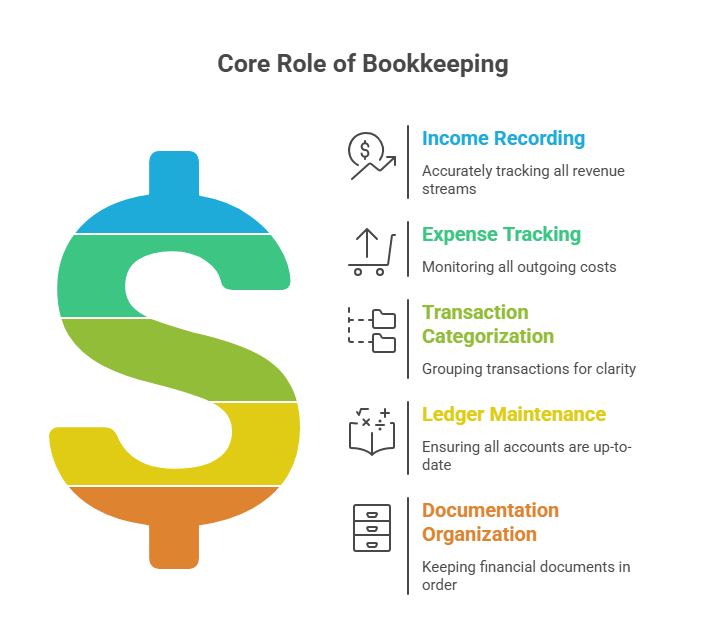
At its foundation, a bookkeeper is responsible for maintaining consistent financial records. That means every sale, expense, and payment gets recorded properly. This includes:
- Recording income and expenses
- Categorizing transactions
- Maintaining ledgers
- Keeping documentation organized
Without this structure, it may become difficult to understand where your money is flowing. This is the first layer of answering “What does a bookkeeper do?”
Managing Day-to-Day Transactions
Small businesses generate constant financial activity. Vendor payments, client invoices, subscriptions, payroll, etc. A bookkeeper tracks all of it consistently.
This process often includes elements of cash flow management that may help business owners understand how money moves through the business. For example:
- Logging daily sales
- Recording vendor bills
- Tracking recurring expenses
- Monitoring incoming payments
Over time, this ongoing tracking may build a reliable financial picture. Even federal small business guidelines from the SBA recommend basic bookkeeping tasks, like reconciling bank accounts and tracking payables and receivables, as essential practices for a healthy business.
Bank and Credit Card Reconciliation
One of the most important (and often overlooked) responsibilities is reconciliation. This is where a bookkeeper compares internal records with bank statements to keep things consistent. From a practical standpoint, this process may help:
- Identify discrepancies early
- Reduce reporting errors
- Keep records aligned for tax preparation
Many Houston-based businesses, especially in service industries, find that regular reconciliation keeps their finances far more manageable month to month.
Handling Accounts Payable and Receivable
Another key answer to “What does a bookkeeper do?” is managing the money going in and out of the business.
Accounts Payable (Money Going Out)
- Tracking vendor invoices
- Scheduling payments
- Avoiding late fees or missed bills
Accounts Receivable (Money Coming In)
- Creating invoices
- Tracking customer payments
- Following up on outstanding balances
In many cases, businesses that stay on top of these processes often have clearer visibility into their cash flow.
Supporting Payroll Processing
Payroll is another area where bookkeeping overlaps with operational accuracy. While payroll systems may automate parts of the process, bookkeepers typically:
- Track employee hours or salary data
- Record payroll transactions
- Help maintain organized payroll records
If you’re exploring structured support in this area, many businesses turn to services like bookkeeping & payroll services to keep things aligned without overcomplicating internal processes.
Generating Financial Reports
Bookkeepers often help generate basic financial reports such as:
- Profit and Loss statements
- Balance Sheets
- Cash Flow summaries
While interpretation may fall more into accounting, consistent reports begin with solid bookkeeping.
Preparing Records for Tax Season
When tax time rolls around, clean books may make a noticeable difference. Bookkeepers organize financial data so it’s ready for filing. This may include:
- Categorized expenses
- Income summaries
- Supporting documentation
Some businesses also explore structured approaches like tax planning to align their financial records throughout the year, rather than managing at the end.
A Common Scenario We See with Houston Businesses
We often see this play out with small business owners across Houston. A local HVAC contractor we worked with had been managing finances on their own for the first couple of years. But as the business grew, so did the transactions. They started noticing:
- Missed expense entries
- Unclear profit margins
- Difficulty preparing for tax season
Once consistent bookkeeping practices were introduced, their financial data became more structured. While it didn’t change the business overnight, it did provide clearer visibility into operations. That’s a practical, real-world example of “What does a bookkeeper do?”
What’s the Difference Between a Bookkeeper and an Accountant
A bookkeeper focuses on the day-to-day side of your finances; recording transactions, organizing financial data, and keeping everything consistent as your business operates.
An accountant, on the other hand, works at a higher level by using that organized data for financial analysis, tax filing, and broader planning. In many ways, bookkeeping lays the groundwork that allows accounting to function smoothly.
Why Bookkeeping Matters for Small Businesses
Here’s what consistent bookkeeping may help support:
- Better financial visibility
- More organized records
- Smoother tax preparation
- Reduced administrative stress
If you’re still asking yourself, “What does a bookkeeper do?”, the simplest answer is that they help you to keep your financial foundation stable.
FAQs
1. Is it worth paying for a CPA?
In some situations, working with a CPA may provide value through organization, reporting clarity, and planning discussions.
2. Why do 90% of small businesses fail?
Many small businesses face challenges such as poor financial management, lack of planning, or inconsistent cash flow tracking. While bookkeeping alone doesn’t solve these issues, maintaining consistent records may help business owners better understand and manage financial performance.
3. Do small businesses really need a bookkeeper?
In many situations, small businesses benefit from consistent bookkeeping once transaction volume increases. Even simple businesses can benefit from consistent financial tracking to avoid errors and maintain clarity.
4. Can a bookkeeper handle taxes?
No, bookkeepers typically prepare and organize financial data, but tax filing and strategy are often handled by accountants or tax professionals. Clean bookkeeping, however, may make that process more efficient.
Wrapping It All Up
At its core, a bookkeeper helps keep your financial records accurate, organized, and usable on a daily basis. If you’ve been wondering, “What does a bookkeeper do?” it comes down to creating structure so your business finances may not feel scattered.
For many small businesses in Houston, having that consistency in place can make routine financial tasks feel far more manageable over time. If you’re looking to bring more structure to your financial processes, you can explore how Dabney Tax & Accounting Services supports bookkeeping, tax preparation, and ongoing financial organization for growing businesses.