
Managing personal finances may feel overwhelming, especially when tax season approaches, and that’s why tax planning services for individuals are so valuable. They’re about more than filing returns. They often involve year-round discussions about managing tax obligations and organizing financial information and explore options like retirement contributions and tax-loss harvesting.
In Houston, whether you’re a freelancer, small business owner, or someone managing multiple income sources, understanding these services may empower you to make informed financial decisions throughout the year.
Understanding Tax Planning Services for Individuals
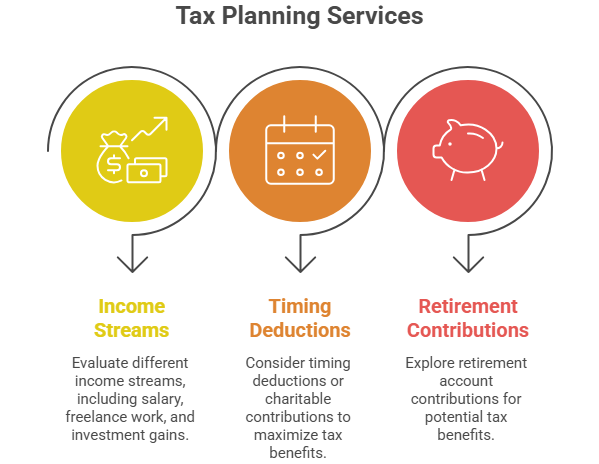
Tax planning services focus on forward-looking strategies rather than simply reacting at year-end. These services may help you:
- Evaluate different income streams, including salary, freelance work, and investment gains
- Consider timing deductions or charitable contributions
- Explore retirement account contributions for potential tax benefits
Early IRS data from the 2026 filing season shows taxpayers receiving larger refunds on average compared with past years, highlighting how changes in tax filings can influence refunds and why many individuals review their tax situation throughout the year.
Reviewing Income and Retirement Contributions in Houston
One of the first areas we discuss with clients is managing income and retirement contributions. Many Houston-based freelancers and small business owners experience fluctuating earnings, making tax planning more complex.
Organizing income and expense records early in the year may help illustrate how contributions to IRAs or HSAs could influence taxable income. In some cases, clients review their documents with professionals through individual tax preparation. This may help keep everything well-documented and support informed decisions in a compliance-safe manner.
Coordinating Expense Timing for Tax Efficiency
Another component of effective tax planning services for individuals involves timing deductible expenses. Certain medical procedures, charitable contributions, or home office expenses may influence how deductions appear in a given tax year.
Clients in Houston often track expenses through bookkeeping or digital tools to get a clearer picture of when deductions may apply. Using tax planning services, you may understand how timing expenses may affect your overall financial picture.
Charitable Contributions and Year-Round Planning
Charitable giving is a common part of personal financial planning, and the way contributions are structured may influence reporting. Some clients consider options like Qualified Charitable Distributions from retirement accounts, which may be considered as part of broader financial and tax discussions.
Houston residents who actively track donations and receipts often find it easier to integrate giving into a broader financial plan. Discussing these approaches proactively may support a more thoughtful and organized financial strategy.
A Houston Client Case Example
Consider a Houston-based freelance graphic designer who experiences seasonal income fluctuations. When he first approached us, he was filing independently and noticed unpredictable tax outcomes each year.
We reviewed his projected earnings, upcoming freelance contracts, and charitable contributions. By adjusting contribution timing, documenting expenses carefully, and discussing potential scenarios like capital gains, he gained a clearer understanding of how his records and projected income might affect his year-end reporting. He also started organizing records using professional support through an individual tax preparation service.
Investment Considerations and Capital Gains
Part of tax planning services for individuals often involves reviewing investments. For instance, tax-loss harvesting may be used in some situations to offset gains, depending on an individual’s circumstances.
Houston clients with investment portfolios sometimes discuss scenarios with professionals to better understand how year-end adjustments could influence their overall tax picture. Proper record-keeping and proactive planning may help illustrate potential opportunities.
Small Business Income and Coordination
Many Houston residents operate small businesses alongside personal income, and coordinating business and personal finances is essential for clear reporting.
Some clients integrate this process with professional guidance through business tax preparation. By reviewing projected income, deductible expenses, and potential contributions together, they may keep records organized and prepare for filing in a compliance-safe way.
Leveraging Technology in Tax Planning
Technology tools increasingly help individuals manage taxes and financial planning. Platforms that track income, expenses, or investments can provide visual insights, helping clients understand potential scenarios in advance.
Houston clients often combine these tools with professional guidance to make year-round planning more manageable. For example, software can illustrate how timing contributions or deductions may affect projections, allowing clients to review potential outcomes in a compliance-conscious manner.
Year-Round Strategies and Monitoring
While many people think tax planning is only needed during filing season, regular review can be more effective. Common year-round strategies include:
- Monitoring income fluctuations and planning for irregular payments
- Reviewing retirement contributions and potential tax advantages
- Tracking expenses and deductions as they occur
Clients in Houston who implement these strategies often feel more informed and prepared, even though the exact financial outcomes cannot be predicted. These proactive steps may support compliance-safe planning and provide a clearer view of finances throughout the year.
FAQs
1. What is the difference between a tax advisor and a tax planner?
A tax planner focuses on forward-looking strategies to help minimize potential future tax burdens, like timing retirement contributions. A tax advisor provides actionable recommendations based on current tax law and your situation, often through licensed professionals such as CPAs.
2. How often should I review my tax planning strategy?
Many individuals benefit from at least an annual review, though year-round monitoring may help anticipate changes in income or investments.
3. Can tax planning reduce my taxable income?
Tax planning may help individuals understand how income and deductions interact under current tax rules. The outcome varies depending on each taxpayer’s situation.
4. Are there specific tax considerations for Texans?
Yes, Texas has no state income tax, but federal obligations and industry-specific considerations, like deductions related to small service businesses or energy sectors, remain important. Localized planning often helps clients optimize their approach from a tax perspective.
Bringing It All Together
We understand that each individual’s financial situation is unique. With thoughtful tax planning discussions, individuals in Houston may gain greater clarity about how their income, investments, and contributions fit into their overall tax picture.
Our team at Dabney Tax & Accounting Services is here to support discussions about your financial picture, helping you feel confident and informed while staying within compliance-safe practices. For more information or to explore how planning conversations might help you organize your finances, reach out to us.