
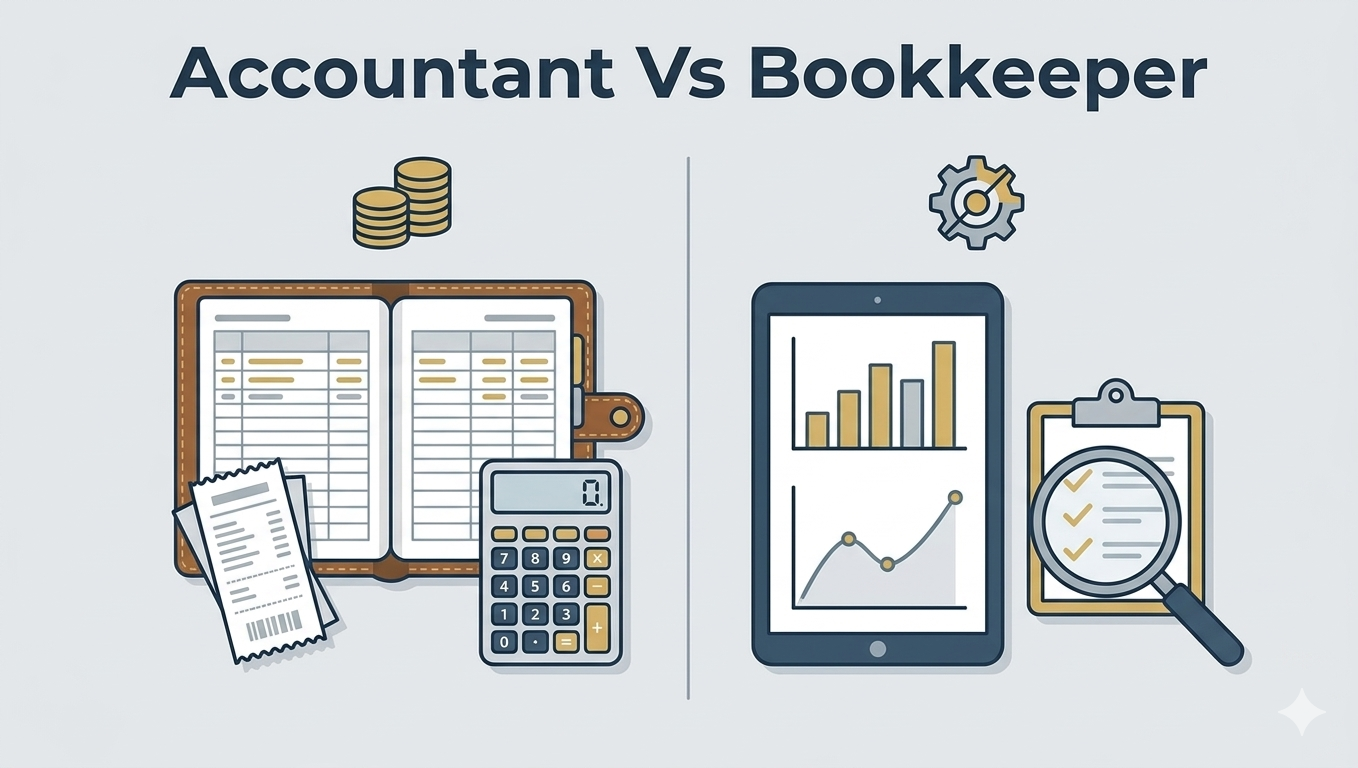
For many business owners, especially those running growing companies around Houston, a common question comes up early in the growth process: What exactly is the difference between an accountant and a bookkeeper? While the two roles often work closely together, they focus on different parts of the financial process.
Understanding the difference can help clarify how financial information moves from daily transaction records to broader financial reporting. Also, many organizations rely on both accountants and bookkeepers working together. One role records the financial activity, while the other works with that information to prepare reports and summaries.
What Does a Bookkeeper Do?
A bookkeeper focuses on maintaining the day-to-day financial records of a business. This usually involves documenting financial activity and organizing transaction data throughout the year.
Typical bookkeeping responsibilities may include:
- Recording income and expenses
- Managing invoices and payments
- Recording payroll-related transactions
- Updating general ledgers
- Reconciling bank and credit card transactions
These routine tasks help maintain a consistent record of business activity. Organized records may support a clearer view of revenue, expenses, and operating costs over time.
Across Houston, from Midtown to The Heights, many service businesses and small companies handle dozens or even hundreds of transactions each month. In these situations, maintaining organized records can become difficult for owners who are already managing daily operations.
That is why some businesses look to services such as bookkeeping and payroll services when financial activity begins to grow. Consistent recordkeeping may help keep financial information organized throughout the year.
What Does an Accountant Do?
Accountants often work with the financial records created through bookkeeping and may handle tasks such as:
- Preparing financial statements
- Reviewing financial data for consistency and completeness
- Supporting tax preparation processes
- Organizing financial summaries for reporting
- Reviewing financial trends across reporting periods
This distinction highlights another part of the difference between an accountant and a bookkeeper. Bookkeepers maintain the financial records, while accountants interpret that information in a broader financial context.
Major Differences Between a Bookkeeper and an Accountant

Looking at a few practical areas can make the difference between a bookkeeper and an accountant easier to understand.
Core Responsibilities
Bookkeepers typically focus on documenting daily transactions and maintaining organized financial records.
Accountants generally review those records and compile them into structured reports such as income statements, balance sheets, or other financial summaries.
In some cases, accountants may also assist with services like financial reporting and analysis, which may help present financial activity in a structured format for business decision-making.
Level of Financial Analysis
Another key difference between an accountant and a bookkeeper involves how financial data is used. Bookkeeping typically focuses on documenting financial activity and keeping records organized.
Accounting usually involves reviewing those records to identify financial patterns, summarize financial performance, and prepare reports used during reporting or tax filing periods.
Education and Credentials
Bookkeepers often gain experience through accounting software training, certifications, or hands-on financial recordkeeping work.
Accountants frequently hold degrees in accounting or finance and may pursue professional credentials such as CPA licensure depending on their area of practice.
Timing of Work
Bookkeeping tasks typically occur continuously as transactions take place. Accounting work may happen monthly, quarterly, or annually when financial records are reviewed and reports are prepared.
This timing difference is another part of the difference between an accountant and a bookkeeper.
Do Businesses Need Both?
Many business owners eventually work with both a bookkeeper and an accountant because the roles complement one another. Bookkeepers maintain consistent financial records. Accountants later review those records and organize them into reports. A typical workflow often looks like this:
- Transactions are recorded throughout the month
- Financial records are reviewed periodically
- Reports or filings are prepared using those records
Financial recordkeeping is a major part of the U.S. business landscape. Federal labor data estimates that approximately 1.7 million accountants and auditors were employed in the United States in recent years, highlighting how widely businesses rely on financial professionals to manage reporting and compliance processes.
A Houston Client Example
A small HVAC company operating near Spring Branch in Houston began taking on more commercial repair contracts across the city. As the workload increased, tracking invoices, vendor payments, and payroll entries started becoming more difficult for the owner.
Bookkeeping support was later introduced to help maintain consistent transaction records throughout the year. When tax season arrived, an accountant reviewed the financial records and prepared the reporting documents based on the year’s activity.
Situations like this often highlight the practical difference between an accountant and a bookkeeper. One role focused on maintaining day-to-day financial records, while the other reviewed that information during reporting periods.
Experiences like this are fairly common among Houston-area businesses, particularly in service industries and construction trades that operate throughout neighborhoods like Cypress, Memorial, and Westchase.
Is a Bookkeeper an Accountant?
Another common question business owners ask is: Is a bookkeeper an accountant?
Bookkeepers focus primarily on recording transactions and maintaining financial records. Accountants typically review those records, prepare financial reports, and assist with financial reporting or tax filing processes.
Because of these differences, many organizations rely on both professionals working together.
When Businesses Typically Use Each Role
Businesses often begin working with bookkeeping support when transaction activity increases and recordkeeping takes more time.
Across Houston and surrounding areas like Pearland, Katy, and The Woodlands, growing small businesses often reach a point where reviewing financial records over longer periods becomes part of routine operations. In many situations, services such as tax planning may be used when reviewing financial activity across reporting periods.
Frequently Asked Questions
Is a bookkeeper better than an accountant?
Neither role is necessarily better. They serve different functions. Bookkeepers maintain financial records, while accountants review those records and prepare financial reports. Many businesses use both roles together.
What does an accountant do that a bookkeeper doesn't?
Accountants typically review financial records, organize them into financial statements, and assist with reporting or tax filing processes. Bookkeepers mainly focus on documenting daily financial transactions.
What is a bookkeeper not allowed to do?
Bookkeepers typically concentrate on recording financial transactions and maintaining consistent records. Tasks such as issuing audited financial statements or providing certain regulated attest services are typically performed by licensed CPAs.
Can a small business operate with only a bookkeeper?
Some businesses start with bookkeeping support only. As operations expand and reporting needs increase, accounting support may also become helpful for preparing financial summaries and tax filings.
Final Thoughts
The difference between an accountant and a bookkeeper largely comes down to how financial information is handled. Bookkeepers record daily financial transactions, while accountants review that information and organize it into financial reports.
Many companies eventually look for support that covers bookkeeping, reporting, and tax preparation as operations grow. We, at Dabney Tax & Accounting Services, work with businesses in the Houston area that need help maintaining financial records, preparing reports, and supporting organized tax-related reporting throughout the year.


